
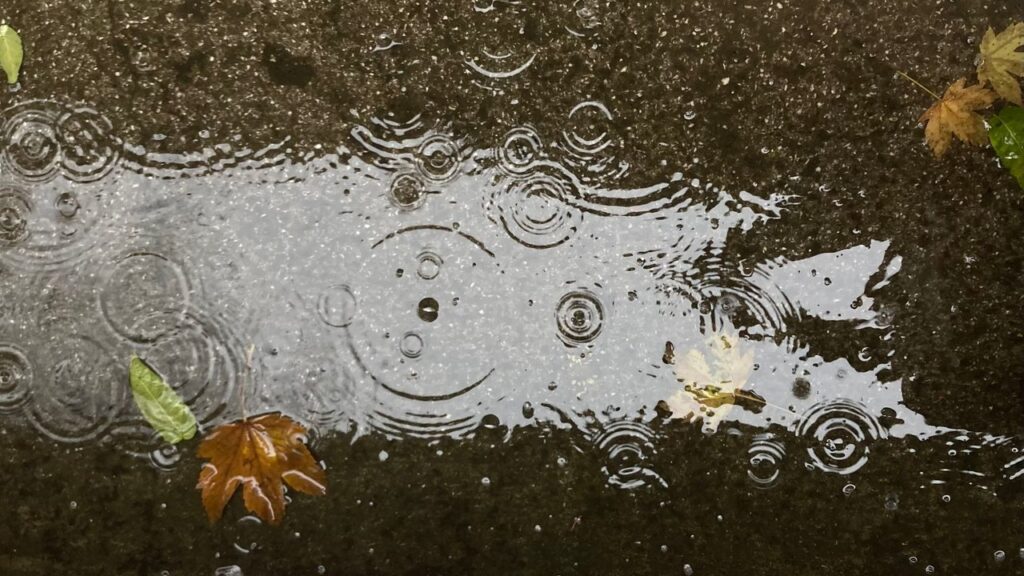
By late November, a sidewalk that looks merely messy can actually be dangerous. Wet leaves pressed flat against pavement create a slick, almost greasy film, and once a layer starts breaking down it loses the texture that normally gives your shoe something to grip. That is why an ordinary task like carrying the trash bins to the curb or walking the dog around the block can turn into a genuine slip risk this time of year, even on a path you have walked a hundred times without thinking twice.
The reason has to do with what happens to a leaf once it starts decomposing. A dry leaf is relatively rigid and has some texture, so a boot sole can still find purchase on it. Once rain or morning dew soaks in, the surface cells break down and release a thin, slimy layer, and that layer sits directly against the concrete or asphalt underneath. The result is a surface with very little friction, not unlike walking on a thin coat of ice. The comparison is not about temperature; it is about how little resistance your shoe meets when it lands.
Why the shaded side of the yard stays dangerous longer
Sun and wind dry out exposed pavement fairly quickly, but a north-facing walkway, a path under a large tree, or the side of the house that never gets direct light can stay damp for days after everyone else’s yard looks dry. If you noticed that one particular stretch near your porch always seems to collect a slick, dark mat of leaves no matter how often you sweep, it is probably because that spot simply does not get enough light or air movement to dry the way the rest of your property does. Treating that section as a standing hazard zone, rather than assuming it will dry out on its own schedule, is a reasonable approach through the whole leaf-drop season.
Chores that quietly turn into tripping hazards
Raking itself is usually fine because you are moving slowly and watching the ground. The riskier moments tend to be the ones where your attention is somewhere else: stepping off a porch with your arms full of recycling, hustling to grab mail before it gets soaked, or walking backward while pulling a hose or a trash can. None of these are unusual tasks, but each one removes your eyes from your feet for a few seconds, and a few seconds is exactly how long it takes to land wrong on a wet patch you did not see.
Steps deserve particular attention. A pile of damp leaves on a single step, especially a step without a handrail, concentrates the slickest part of the surface right where your foot has to land with full weight. Clearing steps and porch landings first, before tackling the rest of the yard, addresses the spot where a fall is most likely to cause real injury rather than just a stumble.
What actually helps underfoot
Footwear with a defined tread pattern, rather than a smooth-soled shoe, gives you more contact points on a wet surface, which matters more on leaf-covered pavement than it does on dry concrete. Walking at a slightly slower pace and taking shorter steps also reduces how much force goes through a single footfall if that footfall happens to land on a slick patch. If you are carrying something, keeping one hand free, or making two trips instead of one, means you still have a way to catch yourself.
Clearing leaves while they are still dry, or as soon as possible after rain, is more effective than waiting for a convenient weekend. Once a layer has been rained on and dried out several times, it starts to mat down into the surface and becomes harder to remove completely, leaving a residue that stays slippery even after the bulk of the leaves are gone. A quick pass with a rake or blower after each rainfall keeps the surface from building up that residue in the first place.
When it makes sense to wait
Not every outdoor task has to happen on schedule. If a walkway is freshly wet and covered, and the chore waiting for you is not urgent, there is nothing wrong with giving it an hour to let the surface firm up, or routing around that section until you can clear it properly.
The practical takeaway for November is simple: treat wet, leaf-covered pavement with the same caution you would give an icy patch, because the ground is giving you less to work with than it looks like it is. Clear the steps first, slow down on the shaded stretches, and keep a hand free when you can. Those three habits cover most of the ordinary moments where a routine chore quietly becomes the moment someone goes down.
Image Credit: أولو الألباب — Pexels License / Pexels