
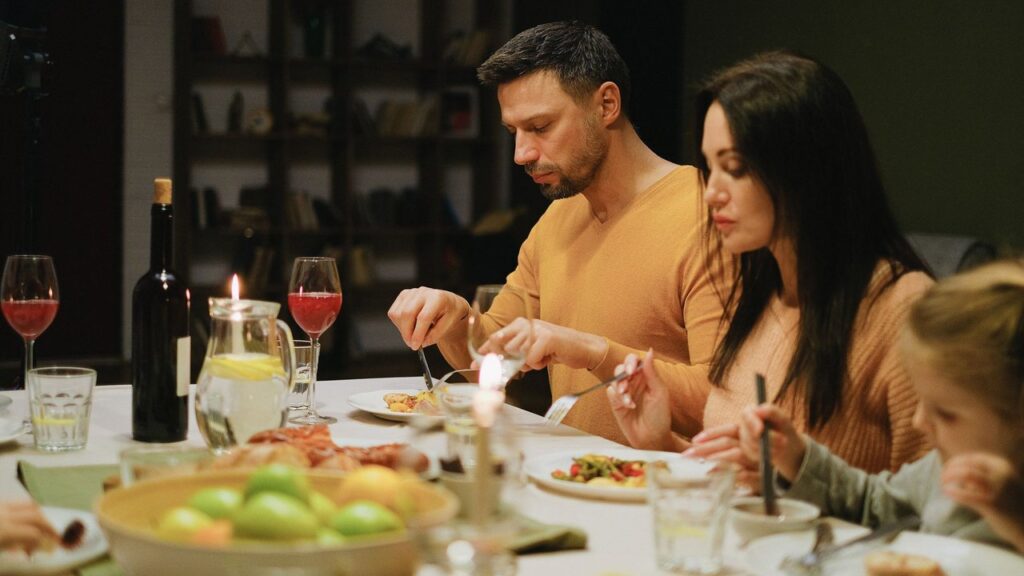
Dinner at your house probably doesn’t look like it did when you were a kid. Maybe nobody sits down at the same hour anymore, and that used to feel like something was broken. It isn’t. The shape of family dinner is shifting, and that shift might be less about loss than about what actually counts as connection.
You grew up with a picture in your head of what a family meal is supposed to look like. Everyone at the table, same time, same plate of food, phones away. That picture came from somewhere, but it was never the only way to do this well. As your household gets busier and your kids get older, the picture stops matching the life you’re actually living.
Why the old version stopped working
Think about your own week. Someone has practice, someone has a late shift, someone is studying for something that can’t wait. You used to treat that as a problem to solve, a schedule to fight. At some point you probably noticed that forcing everyone into one sitting was creating more tension than the meal itself was worth. The ritual started feeling like an obligation instead of a comfort, and that defeats the point of having it at all.
What actually makes a shared meal feel shared
You don’t need five people at a table for a meal to count as togetherness. What matters more is whether people feel checked in on, whether the kitchen still works as a place where conversation happens even if it happens in shifts. Showing up for part of it: sitting with your teenager while they eat even if you already ate, counts for something. Asking real questions: not “how was school,” but something specific that shows you were paying attention, counts for something too. Leaving the door open: making it normal for someone to wander in late and still be welcomed to the table, keeps the ritual alive instead of letting it calcify into a rule nobody can follow.
Letting go of the guilt without letting go of the habit
You might feel like you’re failing some invisible standard when the whole family isn’t eating together most nights. That guilt is doing you no favors. What you’re actually building is a habit of returning to each other, even in smaller doses, even at odd hours. A ten-minute conversation over a plate at nine at night can do more for your relationship with your kid than a silent, resentful sit-down at six ever did.
What this means as your kids get older
As your children move into their late teens and twenties, their independence is going to keep reshaping what family time looks like. You can mourn the old version, or you can notice that they still want to be near you, just on a schedule that fits their actual life. Keep the door to the kitchen open. Keep the food warm, or don’t, and let someone reheat it themselves. What you’re really offering isn’t a seating chart, it’s a standing invitation. That invitation, kept open night after night, is the thing they’ll remember long after they’ve forgotten what time dinner used to be.