
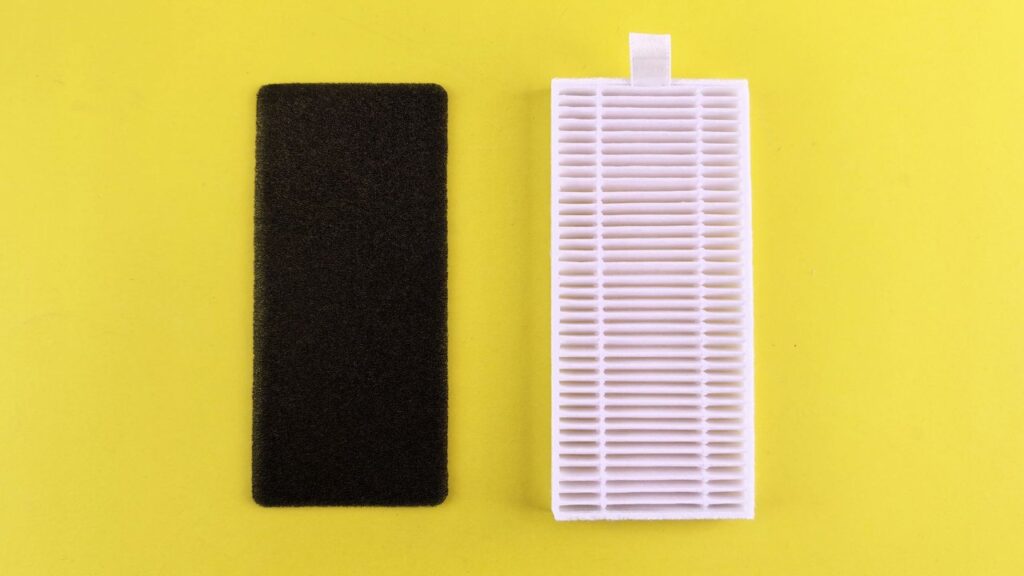
A higher number on a filter box feels like a safer choice, but MERV ratings only tell half the story. The rating measures how well a filter traps particles, not how much resistance it creates to the air trying to pass through it. When a filter is rated for finer filtration than a particular furnace or air handler was designed to handle, the system can struggle to pull air through it at all, and that struggle shows up as weaker heating, uneven rooms, and extra wear on parts that were never built for the added strain.
What MERV actually measures: the Minimum Efficiency Reporting Value scale describes how effectively a filter captures particles of different sizes, from larger dust and pollen at the low end up through finer particles like smoke and some bacteria at the high end. A filter rated MERV 13 is capturing smaller particles than one rated MERV 8. That part is straightforward. What the number does not describe is the filter’s effect on airflow, which depends on the filter’s material, pleat design, and thickness, not just its MERV rating alone.
Why tighter filtration can mean tighter airflow
Every filter creates some resistance, because trapping particles requires physically blocking their path. Finer filtration generally means a denser weave or more surface folded into the same frame, and that density resists airflow more than a looser filter does. A blower motor sized for a basic fiberglass filter was engineered around a certain amount of resistance. Swap in a filter built to catch much smaller particles, and the motor may have to work harder to pull the same volume of air through, or it may simply move less air than the system needs to heat or cool effectively.
This is why a higher MERV rating is not automatically an upgrade. A filter that is excellent at cleaning the air can still leave a home less comfortable if the blower cannot push enough conditioned air past it to reach the rooms that need it. The filtration improved; the airflow did not keep pace, and comfort depends on both.
Reading the signs of restricted airflow
A furnace or air handler fighting a filter it was not designed for tends to show it in a few recognizable ways. Vents that used to feel strong may feel noticeably weaker. Rooms farther from the unit may take longer to warm or cool than they used to. The system may run in longer cycles trying to reach the set temperature, or cycle on and off more frequently as it struggles to maintain airflow. In more serious cases, restricted airflow across the evaporator coil in a cooling system can let the coil get too cold and frost over, which further blocks airflow and can eventually affect the compressor. These are not guaranteed outcomes for every upgrade, but they are the pattern worth watching for after switching to a denser filter.
What the equipment itself was built for
Most residential furnaces and air handlers are designed around a particular range of filtration, commonly in the MERV 8 to MERV 13 range for standard one-inch filters, though this varies by manufacturer and model. The equipment’s documentation, often found on a sticker inside the unit or in the owner’s manual, will usually state a recommended filter type or an acceptable pressure drop range. That specification exists because the manufacturer tested the blower against it. Installing a filter well above that recommendation without otherwise modifying the system is where the mismatch tends to happen.
Thickness matters alongside the MERV number. A four- or five-inch pleated media filter, the kind often installed in a dedicated cabinet near the furnace, can achieve high-MERV filtration with comparatively less airflow resistance than a one-inch filter rated to the same MERV level, because the extra surface area spreads the airflow across more pleats. A one-inch filter pushed to MERV 13 or higher is doing the same filtration job in a much more compact space, which concentrates the resistance. The MERV number alone does not capture this difference, which is part of why two filters with identical ratings can behave very differently installed in the same system.
Matching the filter to the system, not the other way around
The more reliable approach is to start with what the equipment is rated to handle rather than starting with the highest filtration number on the shelf. Checking the furnace or air handler’s documentation for a recommended MERV range or stated pressure-drop tolerance is the first step. If that information is not readily available, a heating and cooling technician can check the system’s static pressure with the current filter in place and advise whether a higher-rated filter would push it outside a safe range, or whether the ductwork and blower have enough capacity to absorb the difference.
For households that want finer filtration for allergies or air quality reasons, there are ways to get there without overtaxing an older system. Moving to a thicker media filter cabinet, if the furnace has room for one, is one route, since it can deliver higher filtration with less resistance than a thin filter of the same rating. A whole-home air purifier designed to work alongside the existing filter is another, since it adds filtration capacity without forcing all of the air through a single denser barrier at the furnace itself.
The real decision point is not whether a higher MERV rating is worth having. It is whether this particular system, as installed, has the airflow capacity to use it without being strained. A filter chosen for the number on the box, rather than for what the equipment underneath it can actually handle, is the detail most likely to turn a well-intentioned upgrade into a less comfortable, harder-working home.
Image Credit: Andrey Matveev — Pexels License / Pexels