
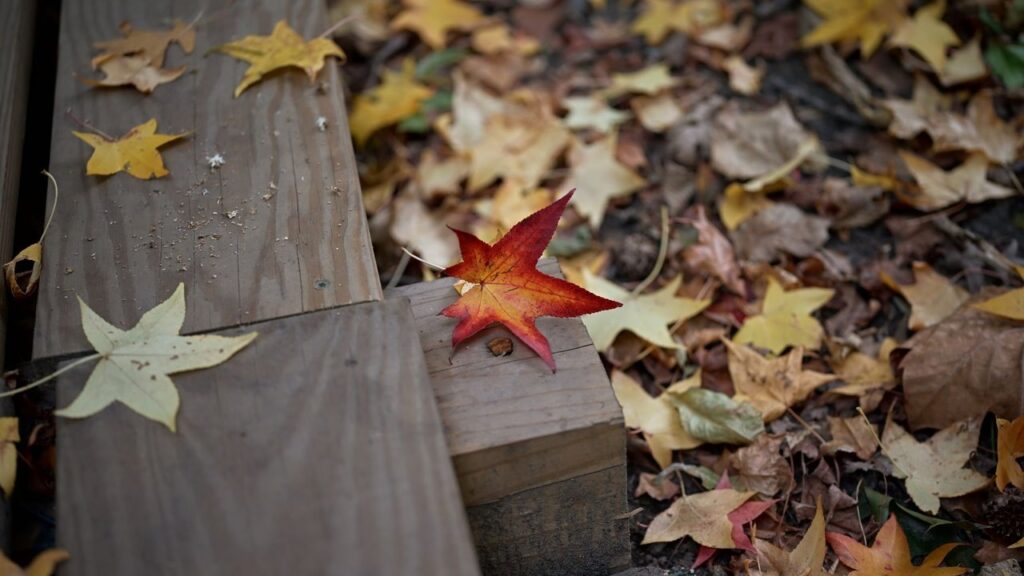
A deck can look perfectly stable in November, with clean lines and no visible sagging, while the real story is happening underneath the drifts of fallen leaves nobody has moved all month. Loose fasteners, soft wood, and corroding hardware do their worst damage quietly, hidden by exactly the kind of seasonal debris that a quick sweep clears off the surface but never actually lifts away from the joints and connections where problems start. A seasonal check worth doing goes past the broom and into the spots leaves settle and stay wet.
Where leaves collect is where moisture lingers. Corners, the gap where decking boards meet the house, and the narrow space around post bases are natural catch points for windblown leaves, and they are also the places most likely to stay damp long after a rainstorm has passed everywhere else. Wet, trapped organic material against wood or metal accelerates decay and corrosion compared with a board that dries freely in open air. Before sweeping, it helps to notice where the leaves actually piled up, because that map doubles as a map of where to look closest.
The ledger board nobody sees without crouching
The ledger board is the piece bolted directly to the house that carries a significant share of a deck’s structural load, and it is almost always the hardest part to inspect because it sits low, tight to the siding, and often behind whatever has blown up against the foundation wall. Clearing leaves away from this strip and looking for dark staining, soft spots when pressed with a flathead screwdriver, or gaps where the board has pulled slightly away from the house is worth the crouching. If the wood gives easily under light pressure or a bolt head wiggles instead of sitting flush, that is a structural question, not a cosmetic one, and it is reasonable to bring in a qualified contractor or inspector rather than guess at a repair.
Fastener heads that have started to back out
Wood naturally expands and contracts with humidity and temperature across a season, and that movement can slowly work screws and nails upward over months, a process that is easy to miss when the fastener head is sitting under a thin layer of wet leaves rather than exposed on a clean board. Running a bare hand, not just a glance, along deck boards after clearing debris helps catch a screw head that has risen a sixteenth of an inch above the surface, since that is both a trip hazard and often an early sign that the board beneath it has started to shrink or split. A fastener that spins freely without biting into solid wood when you try to snug it back down is telling you the wood around it, not just the screw, needs a closer look.
Joist hangers and the metal you can’t see from standing height
Underneath the deck, joist hangers and the brackets connecting beams to posts are frequently the last thing anyone checks because reaching them means getting down and looking up, and leaves that have blown underneath the structure tend to pile against these connections and stay damp against bare metal. Surface rust on a hanger is common and not automatically alarming, but flaking rust that leaves a reddish residue on your hand, or a hanger pulling away from the wood it is nailed to, points toward a connection that is weakening rather than just aging cosmetically. This is one of the areas where a general homeowner inspection should transition into a professional structural opinion if anything looks more than superficial, since load-bearing hardware failure is a genuine safety concern rather than a maintenance inconvenience.
Railings and the post bases hidden by drift piles
Railing posts anchored into or against the deck frame take lateral stress every time someone leans on them, and a post base buried under a season’s worth of leaf drift can be quietly losing its grip on rotting wood without any visible wobble yet. Pushing firmly against a railing from several points, not just grabbing the top rail, gives a better sense of whether the post itself is loosening at its base. Any noticeable give, more than a slight flex, is worth addressing before it becomes a fall hazard, particularly on decks that see young children or guests who might lean or sit on the rail rather than just hold it.
What a seasonal check should actually include
A useful November routine separates clearing debris from inspecting what the debris was hiding. Clear first, inspect second: move leaves off every surface, including underneath the structure, before judging anything by eye. Press and probe: use a screwdriver tip on suspicious wood rather than trusting appearance alone, since surface paint or sealant can mask soft wood underneath. Check every fastener by hand, not just visually, along boards and at railing connections. Note standing water: any spot where water pools instead of draining after you clear leaves is a spot that will keep causing problems every time it rains, regardless of the fasteners themselves. Know your limit: cosmetic wear like faded stain or minor surface rust is a maintenance item you can handle yourself, while structural movement, soft ledger wood, or compromised hangers call for a contractor’s assessment before the deck sees another season of weight and weather.
The leaves that pile up each fall aren’t just a cleanup chore; they’re a temporary cover over the exact joints and surfaces most vulnerable to hidden deterioration. Treating the seasonal sweep as the first step of an inspection, rather than the whole job, is what actually catches a loosening fastener or a softening joist while it is still a simple fix instead of a safety problem waiting under next year’s leaves.
Image Credit: Y — Pexels License / Pexels