
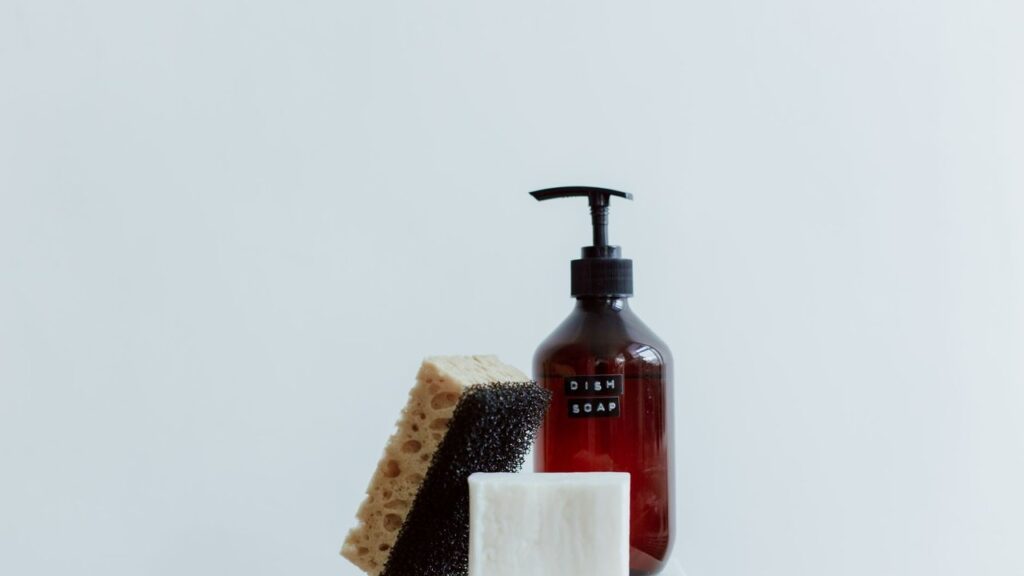
That little note on a sponge wrapper that says “non-scratch” or “heavy duty” is not filler text. Sponges are built with different abrasive layers for a reason, and running the wrong one across a nonstick pan, a glass cooktop or a polished stainless pot can leave marks that never buff out. The fix is simpler than most people think: read the packaging the way you would read a care label, because it is telling you exactly which surfaces the scrub side was engineered for.
Most everyday sponges are actually two products in one. The soft, porous cellulose half is designed to hold water and soap and glide over a surface without biting into it. The textured layer on the other side is where the real variation lives — it can be a mild nylon mesh meant for general dishes, a coarser scouring layer meant for baked-on grease, or in some cases a mineral-infused pad meant for heavy stripping. Packaging usually spells out which category a sponge falls into with words like non-scratch: safe for coated and polished surfaces, heavy duty or extra scrub: built for cookware that can tolerate real abrasion, and delicate or soft care: intended for glass, nonstick and fine finishes. Treat those words as the actual spec sheet, not marketing language.
Why color coding isn’t something you can fully trust
Many households assume a certain color always means the same abrasiveness — green is rough, blue is gentle, yellow is in between. In practice, color conventions vary by manufacturer and are not a regulated standard, so a green pad from one brand can be noticeably softer than a green pad from another. The color can be a helpful quick visual sort once you’ve learned a specific product line, but it isn’t a substitute for checking the printed description, especially the first time you buy a new brand or a multi-surface pack.
Nonstick pans and a coating that doesn’t grow back
Nonstick coatings are thin, and once they’re scored, the scratch is permanent — the exposed metal underneath won’t re-seal itself, and tiny groves make the pan release food less evenly over time. A sponge labeled for nonstick or “delicate” is formulated to clean grease and food residue without cutting into that layer. Reserve a dedicated soft sponge just for nonstick cookware if you cook with it often, since a pad that previously scrubbed a cast iron grate can carry grit that scratches a coated pan on its next use, even if the pad itself is technically soft.
Glass cooktops and scratches you can see at an angle
Glass and ceramic cooktops show damage differently than metal cookware. A scratch might be nearly invisible head-on but catch the light obviously when the burner is off and the sun hits it sideways. Because the surface is both hard and glossy, an abrasive pad can leave a web of fine lines rather than one clean mark, which is harder to disguise. Cooktop manufacturers typically recommend a cleaner and pad combination made specifically for ceramic glass rather than a general kitchen sponge, and checking that the pad is labeled safe for glass surfaces before using it on a cooktop is a reasonable habit even if the stovetop looks cool and the mess looks minor.
Cast iron is the exception, not the rule
Cast iron is one of the few surfaces where a firmer scrub pad is often appropriate, since the cooking surface is thick metal rather than a thin applied coating. A chainmail-style scrubber or a stiff brush is commonly used to clean cast iron without damaging the pan itself. The caution here points the other direction: steel wool or very coarse abrasives can strip the seasoning layer built up through repeated cooking and oiling, which means a pan that looked rough also needs that seasoning rebuilt rather than scratched further away. Reading “safe for cast iron” on a scrubber still matters, just for a different reason than it does for nonstick.
Stainless steel and the grain you can’t always see
Stainless steel cookware and sinks are manufactured with a grain, a nearly invisible directional texture from the polishing process. Scrubbing against the grain with an abrasive pad can leave crosshatch marks that are visible even after the surface is clean and dry, while scrubbing with the grain using the same pad might leave no visible trace at all. Packaging for stainless-specific scrub pads sometimes mentions this directly; when it doesn’t, a safe habit is to wipe in long, consistent strokes rather than circles, and to save the more aggressive pad for the inside of a pot rather than a visible exterior panel.
The next time you’re standing in the cleaning aisle, it’s worth treating the sponge pack the way you’d treat a bottle of cleaner — actually reading what it says it’s for before it ends up in rotation with every pan in the house. Keeping even two designated sponges, one soft for coated and glass surfaces and one firmer for heavier cookware, costs very little and avoids turning a five-minute cleanup into a scratch you’ll be looking at every time you cook.
Image Credit: Ron Lach — Pexels License / Pexels