
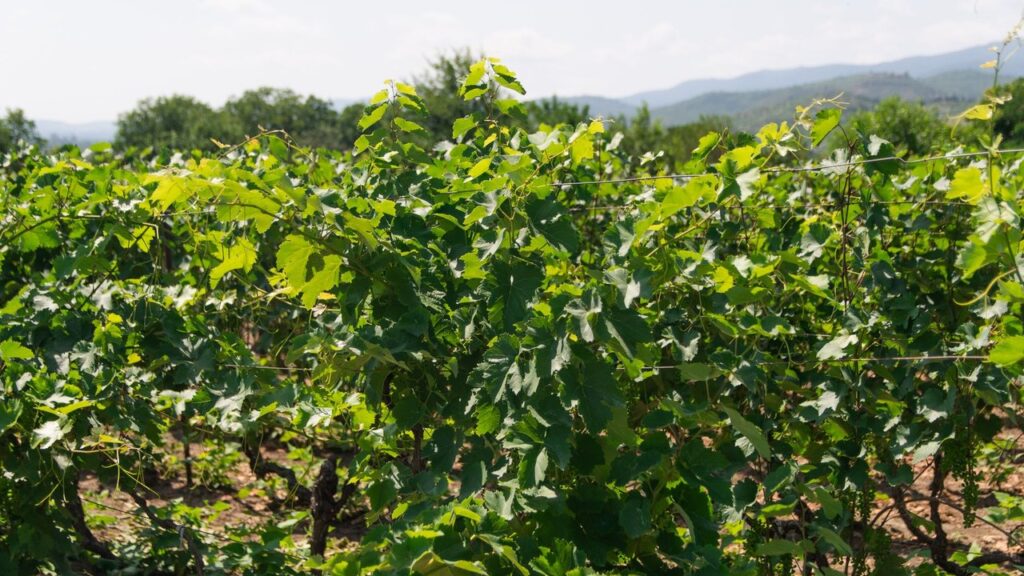
For years I measured spiritual growth by a checklist: more volunteering, more Bible reading plans finished, more serving on committees, more hours spent proving devotion through visible effort. Then I actually sat with John chapter fifteen, where Jesus describes himself as the vine and his followers as the branches, and realized the entire metaphor is built on a sequence I had reversed. Fruit does not come from trying harder to produce fruit. It comes from staying attached to the vine. Abiding comes first; the activity Jesus calls fruit is simply what grows out of that attachment, not a separate project layered on top of it.
That distinction sounds small until you notice how much of it reorders everything. A branch does not strain to manufacture grapes. It does not set goals for how much fruit it will produce this quarter or compare its yield to the branch next to it. It simply remains joined to the vine, drawing whatever it needs from that connection, and the fruit is the natural result of staying put. Jesus is explicit that apart from that abiding connection, a branch can do nothing worth calling fruit at all, no matter how much effort it exerts on its own.
Why doing more felt like the whole assignment
It is easy to understand why striving feels like the obvious path. Effort is visible. You can point to a finished Bible study, a meal delivered to a struggling family, a volunteer shift logged, and feel the satisfaction of having done something measurable for God. Abiding, by contrast, produces nothing you can immediately show anyone. It looks like sitting quietly with scripture, like praying without an agenda, like simply remaining in a relationship rather than performing tasks within it. In a culture that rewards output, that kind of stillness can feel like falling behind, even when it is the very thing Jesus names as the actual source of spiritual fruit.
This is part of what makes the exchange between Martha and her sister Mary in Luke chapter ten so pointed. Martha was busy with the many tasks of hosting, while Mary sat at Jesus’s feet listening. When Martha asked Jesus to intervene, he gently told her that Mary had chosen the better part, the one thing that was actually necessary. Jesus was not condemning hospitality or hard work in general. He was naming a real hierarchy: attentive presence with him comes before activity done for him, and activity disconnected from that presence can become anxious and scattered rather than fruitful.
What abiding actually means in John’s vine imagery
Abiding, in the vine language of John fifteen, is relational rather than procedural. It describes a continuous, settled connection rather than a technique to master. Jesus ties it directly to his words remaining in the disciple and to love being the atmosphere of the relationship, not a transaction to be earned through output. He also connects abiding to prayer, describing a kind of asking that flows naturally out of a life already oriented toward him, rather than prayer used as one more item on a spiritual to-do list.
Read this way, abiding is less a new task to add to an already full week and more a change in how existing moments are held. Reading scripture while abiding looks different from reading scripture to finish a plan; the first is listening for a voice, the second is clearing a box. Prayer while abiding looks different from prayer used mainly as a request line; the first rests in a relationship, the second treats God mainly as a resource to petition. The outward actions might even look similar from the outside, but the posture underneath them is not.
The fruit that actually follows attachment, not effort
When Paul describes the fruit of the Spirit in Galatians chapter five, the list is revealing precisely because of what it contains: love, joy, peace, patience, kindness, goodness, faithfulness, gentleness, and self-control. None of these are projects you complete and check off. They are qualities of character that grow slowly, the way actual fruit grows, through steady nourishment rather than sudden effort. You cannot grit your teeth and manufacture patience the way you can grit your teeth and finish a task list. Patience, like grapes on a vine, develops over time out of whatever is feeding the root.
This reframes what it means to feel spiritually stagnant. If growth were purely a matter of doing more, the obvious fix for stagnation would always be adding another activity. But if growth is fruit from abiding, then stagnation might actually be signaling the opposite problem: a connection that has grown thin from being crowded out by all the activity meant to prove devotion. Sometimes the branch does not need another task. It needs fewer distractions pulling it away from the vine.
A hypothetical week spent striving versus one spent abiding
Picture two versions of the same woman in the same ordinary week. In the first version, she wakes early, rushes through a chapter of scripture mainly to feel she has checked the box, signs up for an additional service commitment at church because someone asked and she did not want to seem uncommitted, and spends her evenings mentally reviewing whether she has done enough that day to call herself spiritually serious. By Friday she is exhausted, and the exhaustion itself becomes evidence, in her mind, that she must be growing, because growth is supposed to be hard.
In the second version, the same woman reads the same chapter, but she stays with one sentence that catches her attention instead of hurrying to finish, and she brings an honest question to God about it rather than performing certainty. She says no to the additional commitment, not out of laziness but because she recognizes it would crowd out the quieter, steadier practices that keep her attentive to God during the week. By Friday she has likely done less by any visible measure, yet she is less anxious, more attentive to the people actually in front of her, and more able to respond to a friend’s crisis with patience rather than resentment at one more demand on her time. Neither woman’s week proves anything by itself, since character grows slowly and no single week settles the matter. But the second week reflects the order Jesus describes: presence first, fruit following, rather than fruit forced ahead of presence.
Rest as part of the design, not a reward for finishing
Jesus’s invitation in Matthew chapter eleven, where he tells the weary and burdened to come to him and promises rest, fits naturally alongside the vine image rather than standing apart from it. He describes his yoke as easy and his burden as light, language that makes little sense if spiritual maturity is primarily measured by how much a person can carry or accomplish. A yoke is meant to share weight, not add it. If someone has made her faith heavier over time rather than lighter, that itself may be worth examining, not as proof she is finally working hard enough, but as a sign that something in the metaphor has been inverted.
This does not mean effort has no place. Branches still have to stay rooted; staying abided is itself an ongoing choice, not passive drifting. Paul worked hard, served extensively, and encouraged diligence throughout his letters. The point is not that effort is wrong but that effort divorced from abiding becomes brittle, while effort growing out of abiding becomes sustainable fruit. The same action, serving a meal, teaching a class, showing up for a friend in crisis, can be either exhausting self-proof or natural overflow, depending on what is actually feeding it.
A question worth asking instead of a new task to add
The part of the vine metaphor that often gets left out: pruning
Abiding is only half of what Jesus describes in John fifteen. He also names a gardener, his Father, who is actively involved in the branch’s life in two different ways. A branch that bears no fruit at all is removed. A branch that already bears fruit is pruned, cut back, so that it will bear even more. The second category is easy to miss, because it undercuts a comfortable assumption: that once a person is visibly fruitful, the hard part is over and all that remains is to keep abiding in the same settled way indefinitely. Jesus describes something less tidy. Even fruitful branches get cut.
This matters because it reframes what loss can mean inside a life oriented toward abiding rather than striving. A ministry role that quietly ends, a friendship that fades, a plan that falls apart despite genuine effort and apparent fruitfulness, can feel like failure or even like God’s absence. But the gardener imagery suggests another possibility: that some removals are not punishment for insufficient effort, and not evidence that the abiding has failed, but the ordinary work of pruning, clearing away growth that was taking energy from the root in order to make room for more.
Consider a hypothetical: a man spends several years leading a weekly Bible study he started, something that genuinely bore fruit in the people who attended. Then a job change makes the schedule impossible, and the study ends. If he measures his spiritual life purely by output, the ending reads as a loss, maybe even a failure of commitment. But if he holds it alongside the gardener image, the same ending can be read differently: not as proof the fruit was false, but as the kind of cutting back that redirects a branch’s energy rather than discarding it. He does not have to manufacture a replacement activity immediately to prove the fruit was real. The vine is still the vine, whether or not that particular branch is currently visible.
None of this makes pruning painless, and Jesus does not pretend it is. The point is not that every disappointment is secretly pruning in disguise, since Jesus also names branches that are removed because they never bore fruit at all, a different and less comfortable category entirely. The point is that abiding was never presented as a guarantee of uninterrupted visible fruitfulness. It is a description of where to stay attached, even when, especially when, the gardener is cutting something back.
If the goal of spiritual growth were simply accumulating more religious activity, the path forward would always be obvious: add one more thing. But if growth is fruit that follows attachment, the more useful question before adding anything new is simpler and harder: is this growing out of staying connected to Christ, or is it an attempt to generate fruit without the root that actually produces it? That question will not always yield a tidy answer, and it is not meant to become its own anxious checklist either. It is meant to interrupt the reflex to equate busyness with depth, long enough to notice whether the connection itself, the actual abiding, has quietly become the thing most neglected in the pursuit of doing more for God.
Image Credit: Алексей Вечерин — Pexels License / Pexels