
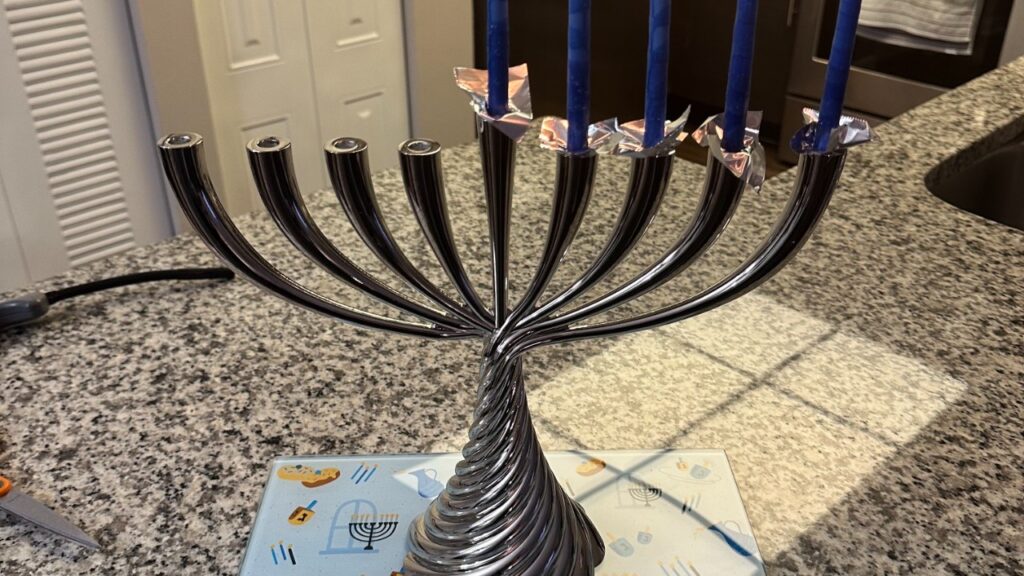
Hanukkah comes early this year. Not a little early. Ten days earlier than last year, by the Jewish calendar’s own reckoning. That means the holiday lands on top of something else entirely — Shabbat, the weekly day of rest. The two don’t usually overlap on night one. This year they do.
For a Jewish household, that’s not a trivia fact. It’s a real question about how you light your candles tonight versus how you’ll light them tomorrow. The order changes. The timing changes. And it only changes because of where the calendar happened to fall this specific December.
When it actually starts
Hanukkah 2026 begins at sundown on Friday, December 4, and runs through nightfall on Saturday, December 12, according to Chabad.org’s official 2026 Hanukkah calendar page, which is actively publishing this year’s specific dates and lighting instructions right now. That’s ten days earlier than 2025’s start, a shift that happens because Hanukkah follows the Hebrew calendar’s lunar-based dating, not the fixed Gregorian one your wall calendar runs on.
Eight nights. One candle added each night, building toward a fully lit menorah on the last one. That part doesn’t change year to year. What changes this year is which day of the week night one lands on — and that single fact reshapes the first weekend of the holiday.
Why one Friday changes everything
December 4 is a Friday. Friday, as it turns out, is also the start of Shabbat — the Sabbath that runs from Friday sundown to Saturday nightfall every single week, holiday or not. Chabad.org’s page calls this out directly to visitors landing on it right now, with a link to “special instructions for tonight’s Menorah lighting, due to Shabbat observance.” That’s not boilerplate. That’s a live notice for a real scheduling conflict this year actually creates.
Shabbat has its own candle-lighting ritual, at its own time, every week. Hanukkah has its own candle-lighting ritual, at its own time, every night. Most years, those two never have to share an evening. This year, night one of Hanukkah is also the start of Shabbat — which means a family has to decide which candles go first, and why.
The eighth night, December 11, runs into the same situation a second time, since it falls on Erev Shabbat as well. So this isn’t a one-night quirk. It bookends the whole holiday.
The order that changes on night one
Hanukkah candles go first, and early: because Shabbat candles can’t be lit after Shabbat itself begins, and because work of any kind — including lighting a flame — is set aside once Shabbat starts, the first Hanukkah candle has to be lit before sundown on December 4, ahead of the normal after-dark timing most families are used to. The Shabbat candles then follow, also before sundown, in their usual place as the last thing lit before the day of rest begins.
That’s a real reversal of the usual rhythm. On an ordinary Hanukkah night, you wait for dark, then light the menorah, then go about your evening. On this particular Friday, the lighting has to happen while there’s still daylight left — which means planning dinner, candle-lighting and everything else around a sundown clock instead of a calendar block.
What happens to night two
Night two doesn’t get to run on the usual schedule either. Because Shabbat itself doesn’t end until nightfall on Saturday, and because the Havdalah ritual that formally closes Shabbat has to happen first, the second Hanukkah candle waits until after Havdalah on Saturday evening — later than a normal second night would run. One early night, one delayed night, back to back.
It’s a small logistical ripple with a real effect on an actual family’s Saturday evening: dinner, the end of Shabbat, and the second night of Hanukkah are all stacked into the same few hours, in a specific order that only this year’s calendar produces.
The eighth night does it again
By the time the eighth and final night arrives on December 11 — also a Friday, also Erev Shabbat — the household already knows the drill from night one. The final menorah lighting, with all eight candles plus the helper candle lit, happens early and before sundown, the same way the first one did, instead of after dark the way nights three through seven ran.
There’s something almost fitting about the holiday’s brightest night — eight flames instead of one — landing on the same early-lighting evening as its first. It bookends the eight days with the one scheduling quirk this year’s calendar creates, rather than spreading it randomly through the week.
Why this isn’t a new rule, just a new year
None of this is a change to how Hanukkah works. The lighting order when Shabbat and Hanukkah overlap on the same evening is long-established Jewish practice — Chabad.org’s page exists specifically because this situation recurs often enough that families need a clear, current answer for exactly when it applies. What’s new is simply that 2026 is one of the years it applies, and families who’ve never had to think about the order before are the ones most likely to be caught off guard on December 4.
If your household has navigated an Erev Shabbat Hanukkah night before, this year’s instructions will look familiar. If this is the first time the two have overlapped since your kids were old enough to help light candles, it’s worth reading through the specifics once, ahead of time, rather than figuring it out at 4 p.m. on the fourth.
What to actually do with this before December 4
Check sundown for your location, not a general time: the exact minute Shabbat begins shifts by location and by week, so a family in Minneapolis and a family in Miami aren’t working from the same clock. Chabad.org’s page links out to location-specific candle-lighting times — that’s the number that actually matters, not a rounded “around 5 p.m.” guess.
Plan the early lighting like a deadline, not a suggestion: if Hanukkah candles normally get lit after the family’s settled in for the evening, this year that has to happen before the usual dinner rush, not after it. Treat December 4’s sundown time the way you’d treat a flight departure — work backward from it, not toward it.
Tell the kids why the order is different this one time: for a child who’s only known Hanukkah as “light the candles after dark,” an early lighting can feel like a mistake unless someone explains the Shabbat overlap ahead of time. It’s a genuinely good, concrete way to talk about why these two observances each have their own fixed rules, rather than one simply bending to the other.
The part worth sitting with
There’s something true about faith showing up in a scheduling conflict instead of a sermon. Nobody wrote a lesson plan for “what do you do when two sacred things land on the same evening.” The calendar just did that, and the tradition already had an answer waiting — light early, light in order, let the next evening carry what the first one couldn’t.
That’s a pretty good description of most real weeks, holiday or not. Two things you care about collide on the same Friday, and the fix isn’t to drop one — it’s to figure out which comes first, and trust that the rest still gets its turn.
Three things to carry into December 4
1) The date moved, the rule didn’t. Hanukkah starting ten days earlier than last year is a calendar fact, not a change to how any of the lighting works.
2) Night one and night eight both run early this year. Both land on Erev Shabbat, so both get lit before sundown instead of after dark.
3) Night two runs late, after Havdalah. One early night creates one delayed night right behind it — plan for both, not just the first.
You don’t have to get the theology of it perfect to get the evening right. Check your local sundown time, light the first candle a little earlier than you’re used to, and let the rest of the eight nights unfold the way they always do. The order is only unusual once — by night three, it’s just Hanukkah again.