
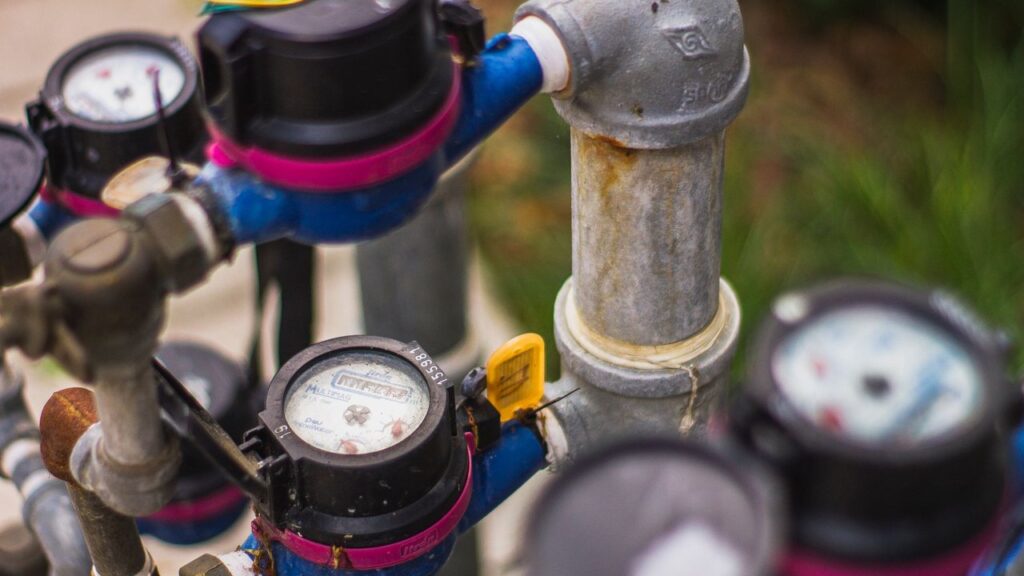
Water pressure can quietly run high for years without a single drip, hiss, or bang to give it away, and that silence is exactly what makes it worth checking. A faucet still works, a shower still sprays, and nothing sounds wrong — yet the force behind that water may be slowly stressing valves, hose connections, and appliance fittings every time you turn a handle. The only way to know for sure is to put an actual number on it, and that number comes from a simple gauge you thread onto an outdoor spigot.
The range plumbing systems are built around: the EPA’s WaterSense program notes that household fixtures perform best when incoming water pressure sits between 45 and 60 pounds per square inch (psi). That range isn’t arbitrary — it’s the pressure window most residential faucets, toilets, washing machine valves, and water heater fittings are designed and tested around. Pressure that creeps well above 60 psi doesn’t make anything louder or more dramatic in the moment. It just means every fixture in the house is absorbing more force than it was engineered for, every single time water flows.
Why Some Homes Run Well Above 80 PSI Without Anyone Noticing
Pressure at the tap isn’t something homeowners set — it’s largely a function of elevation and distance from the utility’s water storage tank. The Portland Water Bureau’s guide to water pressure and flow explains that utilities store water in elevated tanks so gravity does the work of pushing it through the system, which means homes lower in elevation or closer to a tank naturally receive stronger pressure than homes higher up or farther away. Portland aims to keep most homes between 40 and 80 psi, but acknowledges some properties fall outside that band simply because of where they sit relative to the supply.
That same guide points out something specific worth knowing if your house tests high: plumbing code requires a pressure-reducing valve, or PRV, on any home receiving more than 80 psi. That threshold exists because sustained pressure above it is considered a genuine risk to plumbing components over time, not a matter of personal preference. A home can clear that threshold for years, with washing machine hoses, toilet fill valves, and faucet cartridges absorbing the extra force the entire time, and nothing will announce it until a fitting finally fails. Troubleshooting water pressure and flow | Portland.gov
How a Hose Bibb Gauge Test Actually Works
Checking your own number takes a ten-minute test and a gauge that typically costs well under twenty dollars at a hardware store. WaterSense describes the process simply: turn off every water-using fixture and appliance in the house, screw the gauge onto an outdoor hose bibb, and open that spigot all the way. The gauge reads your static service pressure — the baseline force behind the water when nothing else in the house is competing for it. If the needle lands comfortably between 45 and 60 psi, your plumbing is operating in the range it was built for. If it reads noticeably higher, that’s useful information you didn’t have five minutes earlier. Home Maintenance | US EPA
It’s worth separating pressure from flow, because the two get confused constantly and lead people to the wrong fix. Portland’s guide draws a clear line: flow rate is how much water comes out of a fixture over time, usually measured in gallons per minute, while pressure is the force pushing that water through the pipes, measured in psi. A clogged aerator, corroded galvanized pipe, or partially closed valve can make water feel weak at the tap even when pressure is completely normal — or even high. That’s why a dribbling faucet alone isn’t proof of low pressure, and a strong-feeling shower isn’t proof that pressure is safely in range. The gauge test, not the feel of the water, is what actually tells you where you stand. Troubleshooting water pressure and flow | Portland.gov
When a Pressure-Reducing Valve Becomes the Fix
If your test comes back well above 60 psi, the next step isn’t a DIY adjustment at the faucet — it’s a conversation about the PRV. WaterSense recommends having a professional adjust or install a pressure-reducing valve to bring service pressure back down toward that 60 psi target, and Portland’s code requirement for homes above 80 psi underscores that this isn’t a cosmetic preference. A PRV sits on the main line where water enters the house and tempers incoming pressure before it ever reaches a faucet, toilet, or appliance. Some homes already have one installed that’s simply failed or drifted out of adjustment over the years, which is itself worth ruling out before assuming you need a brand-new unit. Home Maintenance | US EPA
If your test instead comes back below 45 psi, that’s a different problem — WaterSense notes pressure that low can point to an undetected leak somewhere in the home’s plumbing, which is worth investigating before anything else. Home Maintenance | US EPA
None of this requires guessing based on how the water feels coming out of the tap. A gauge that costs less than a dinner out gives you an actual psi reading in the time it takes to run a load of laundry, and that number tells you whether your plumbing is operating the way it was designed to, running under unnecessary strain, or losing pressure to a leak you haven’t found yet. Testing once, and then again any time something about your water use or utility notices changes, is a small habit that replaces a silent unknown with an answer you can actually act on.
Image Credit: Nothing Ahead — Pexels License / Pexels