
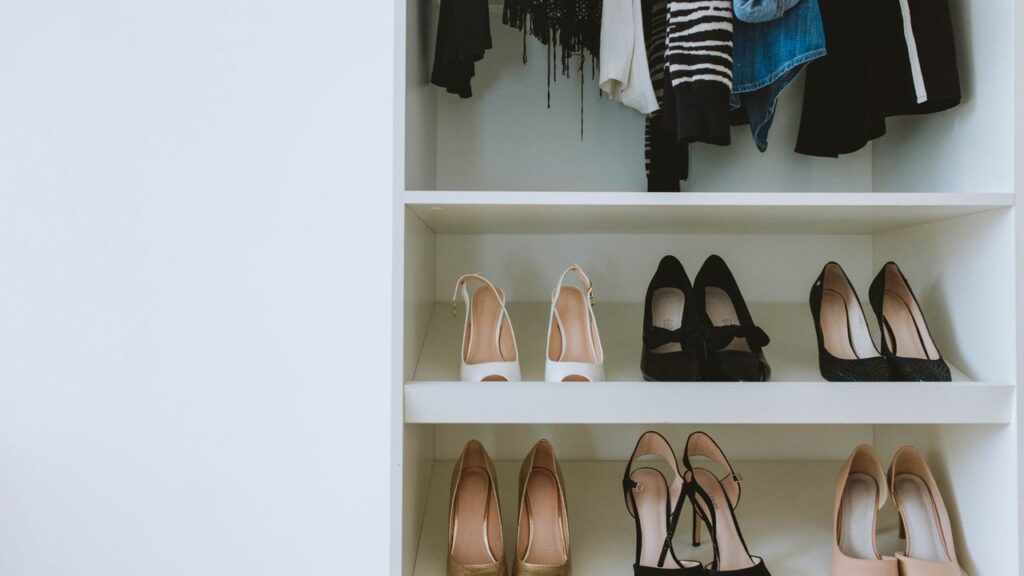
Buying another bin or stackable tray feels like progress, but it rarely fixes a closet that was never organized by zone in the first place. If you have spent money on organizers that ended up empty or in the wrong room, the real problem usually isn’t a lack of storage products. It’s how the space is being used. These six shifts cost nothing and work with the storage you already own.
Why another bin never actually fixed the shelf
Closets usually fail for one of two reasons: either you’re storing things where they don’t belong, or you’re trying to fit too much into a space that was never designed for it. A new organizer can hide clutter for a week, but it doesn’t solve either problem. You end up buying a second one, then a third, and the closet still feels chaotic because the system underneath never changed. Before you add anything new, it helps to look at what’s already there and ask whether it’s sorted, not whether it needs a container.
Sorting by how often you reach for something
Sort by frequency, not category. Instead of grouping everything by type, group it by how often you use it. Items you reach for weekly belong at eye level and within easy reach. Seasonal or occasional items can live higher up or lower down, even if that means they’re no longer “with” similar items. This single change often frees up more usable space than any bin ever could, because it puts your daily decisions first instead of organizing for an imaginary tidy photo.
Working with the shape of the shelf instead of against it
Measure the actual space before assuming it’s too small. A lot of wasted storage comes from treating an oddly shaped shelf or a shallow cabinet as unusable, when it just needs items that fit its real dimensions. A narrow gap next to a dresser can hold flat items stood on their sides. A deep shelf can hold taller stacked items toward the back and shorter ones in front, so you can still see both. You don’t need a custom insert for this — you need to actually measure the space and match what goes in it, rather than guessing.
Letting go of matching sets and lids
Stop requiring every container to match or have a lid. A lot of storage capacity gets lost to boxes that only make sense with their original packaging, or baskets that only work if everything inside is the same size. An open tray, a shallow drawer, or even a repurposed shoebox can hold things perfectly well without matching anything else in the room. If you’ve been holding off on using a space because the “right” organizer hasn’t shown up yet, that wait is often the actual obstacle, not the shelf itself.
Giving every shelf and drawer one clear job
Assign each space a single purpose instead of a general category. “Linens” is too broad and tends to collect odds and ends over time. “Bath towels only” or “sheets for the guest bed” gives you a clear rule for what belongs and what doesn’t. When a space has one job, it’s much easier to notice when something doesn’t belong there anymore, and much easier to put things back correctly without thinking hard about it.
Using vertical space you’ve been stepping around
Look up and down, not just straight ahead. The area above hanging clothes and the floor space below them often sit empty because they’re awkward to reach. A low, flat container for shoes or out-of-season items can use that floor space without needing a special rack. Up top, items you only touch twice a year — holiday decorations, guest bedding, luggage — can sit there without being in your way the rest of the time. You’re not adding storage, you’re finally using storage that was already part of the closet.
Clearing out before you reorganize anything
Remove what doesn’t belong in the space at all before rearranging what’s left. It’s tempting to skip this step and go straight to sorting, but a closet that still holds things you no longer use will feel tight no matter how cleverly it’s arranged. This doesn’t require a dramatic decluttering project in one sitting. Pulling out even a few clearly unused items — the coat that doesn’t fit, the gift you never used — makes a real difference before you even touch the shelves.
None of these changes require a trip to the store or a weekend torn apart by bins and labels. They ask you to look at the storage you already have and treat it as a set of decisions rather than a set of empty containers waiting to be filled. If a closet in your home still feels crowded after you try one of these, it probably doesn’t need another organizer. It needs one more honest look at what’s actually living in there.
Image Credit: Anastasia Shuraeva — Pexels License / Pexels