
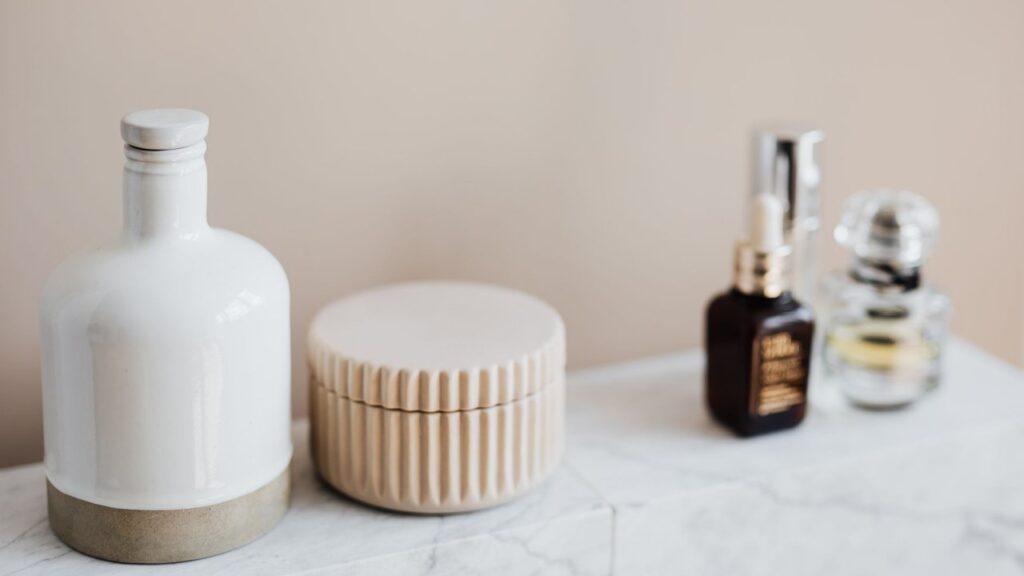
Open your daughter’s bathroom cabinet and you might not recognize half of what’s in there. The jars and tubes look nothing like what sat on your own shelf twenty years ago. It is not just packaging — the whole idea of what skincare is for has shifted underneath you.
You grew up with a routine built around fixing things. Cover the breakout, dry out the shine, wait for your skin to calm down on its own schedule. The younger women in your life are starting earlier and thinking longer term, and that single difference explains a lot of what looks strange to you on the shelf.
Why her routine starts before there is anything to fix
You probably didn’t think about sunscreen as skincare — it was something you grabbed at the beach and forgot the rest of the year. For a lot of younger women now, it is the first step of the day, every day, rain or shine. The logic is prevention instead of correction. You deal with damage after it shows up. She is trying to keep it from showing up at all, and that one shift reorders everything else she buys.
That mindset spills into the ingredients she reaches for too. Where you might have stocked up on something harsh and fast-acting for a flare-up, she is more likely to pick a gentle, repeated step meant to be used for months. It is less about rescue and more about maintenance, which can look like overkill to you and like basic upkeep to her.
The language has changed, not just the products
Notice the words on the packaging the next time you’re in a drugstore aisle with her. Where you’d see “anti-aging” front and center, she is drawn to things that promise “barrier support” or “balance.” The vocabulary has moved away from fighting your skin and toward protecting it, and that reframing matters more than it sounds like it should.
You were taught, in a thousand small ways, that skin needed correcting — smoothed, lightened, tightened. She has absorbed a different message, one that treats skin as something to care for rather than something to apologize for. You can hear it in the way she talks about her own face. She says her skin is “having a rough week,” not that it is broken.
What simpler sometimes means and what it doesn’t
None of this means her routine is actually simpler than yours was. It might have more steps, more products, more time at the mirror each night. What’s different is the goal behind all that effort. You were often buying to hide something. She is often buying to keep something steady, which is a quieter kind of upkeep even when it takes longer.
That doesn’t make your old habits wrong, and it doesn’t make hers automatically better. You learned what worked for your skin in your own time, through trial and plenty of error. She is doing the same thing now, just with a different set of assumptions handed to her early.
The next time you’re standing next to her in that aisle, comparing jars, it helps to remember you are not actually disagreeing about skincare. You are each carrying a different idea of what your face is supposed to need from you, and both of you arrived at yours honestly.