
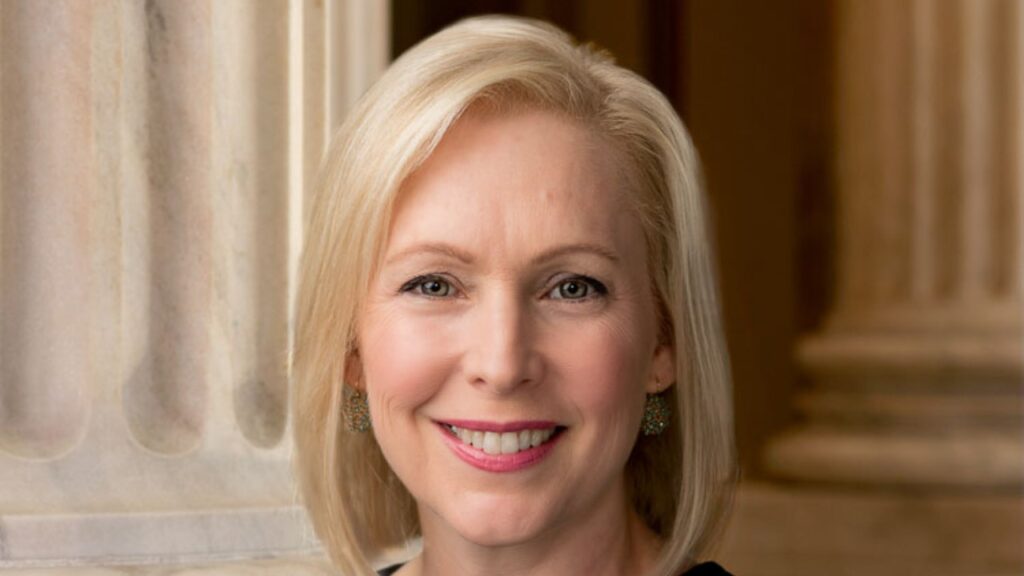
Sometimes a senator says the quiet part out loud. You can usually tell the moment it happens, because the sentence stops sounding like a press release. That’s what happened when Sen. Kirsten Gillibrand (D-NY) sat down for an NPR interview this month and laid out, in plain terms, what she thinks her party owes voters next.
Speaking on NPR’s Morning Edition after Democrats retook Congress in the midterms, Gillibrand told the network her party’s priorities are lowering costs, restoring health-care access, and ending the war in Iran.
The Medicaid line, said flatly
On health care, Gillibrand pointed to bipartisan legislation that would restore Medicaid coverage lost under recent cuts. Asked what happens if President Trump refuses to sign it, she didn’t hedge. “I dare him to veto,” she said. It’s a short line, but it tells you where she thinks the political leverage actually sits. She’s betting a veto would cost him more than a signature would.
For anyone who’s dealt with a Medicaid renewal letter, a sudden coverage gap, or a pharmacy counter quoting a different price than last month, that bet is the part worth watching. The bill already has bipartisan support, crossing the aisle on its own. The open question is only whether it reaches a signature.
“We have to end this war in Iran”
Gillibrand didn’t stop at domestic policy. On foreign policy, her language was just as direct: “We have to end this war in Iran.” She’s framing it as a party priority, not a side issue. That framing is itself a statement about where she thinks attention has been misallocated lately.
A ban aimed at Congress itself
She also proposed banning stock trading by members of Congress and senior administration officials. That’s a policy that would apply to her own colleagues, not just the other party. It’s the kind of proposal that’s easy to say and hard to pass, since it asks sitting lawmakers to give something up voluntarily. Whether it ever moves is a separate question from whether she’s now on record proposing it.
What she wouldn’t commit to
Asked directly about a third impeachment push, Gillibrand declined to commit either way. That’s worth noting, precisely because it’s the one moment in the interview where she chose not to be definitive. It’s a real contrast to how flatly she answered on Medicaid and on Iran just minutes earlier.
Why this one interview is worth more than a quote
You can read a lot of political interviews and come away with nothing you can actually use later. This one is different, because it’s specific: a named bill, a named dare, a concrete ban proposal with her own name attached to it. If Medicaid coverage is something your household has leaned on — or watched a parent or a neighbor lean on — the thing to actually track isn’t the quote itself.
It’s whether that bipartisan bill moves, and whether the dare she just issued ever actually gets tested.