
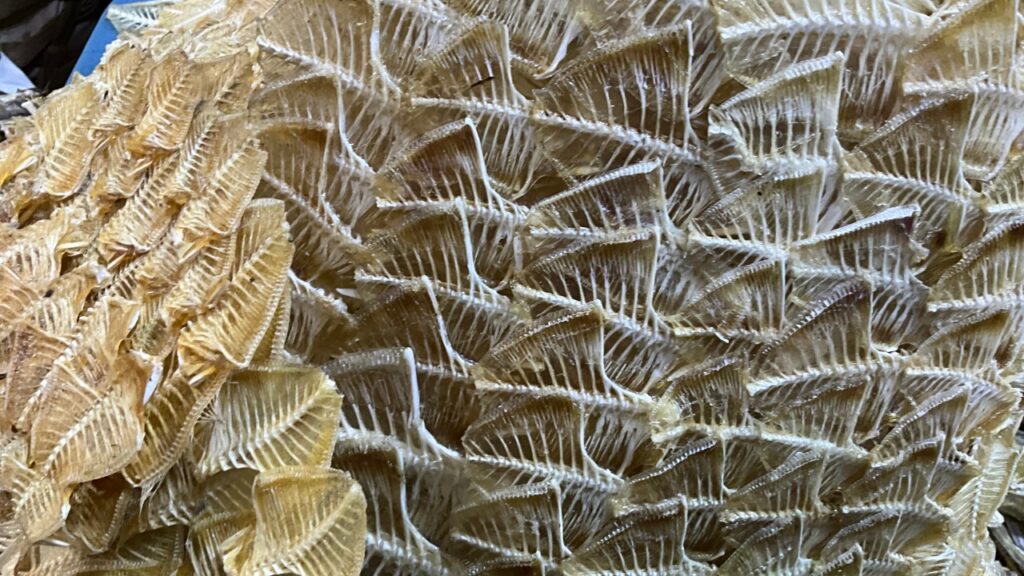
That package of dried fish from the Asian grocery store down the street is worth a second look before your next meal. A Brooklyn company has recalled two kinds over the exact hazard that un-gutted dried fish is known for.
What’s being recalled, and by whom
Prime Food Processing LLC, based in Brooklyn, New York, has issued two separate safety warnings covering three products, according to the U.S. Food and Drug Administration. The first covers “Dried Herring Fish,” item AF4110, lot code 25180, sold in 7-ounce clear plastic packages with blue trim — 225 cases in all. The second covers two “Dried Croaker Fish” items, AF1340 and AF1420, 100 cases each, 200 cases combined, according to a second FDA notice.
Both notices name the same company, the same root cause, and the same kind of grocery store — this isn’t a chain-wide recall, but it’s not a one-off either.
Where it was sold
The herring was distributed to Asian grocery stores across 28 states: Alabama, Arkansas, California, Colorado, Florida, Georgia, Hawaii, Idaho, Illinois, Indiana, Kansas, Massachusetts, Maryland, Michigan, Minnesota, Missouri, North Carolina, New Jersey, Nevada, New York, Ohio, Oklahoma, Oregon, Tennessee, Texas, Utah, Washington and Wisconsin.
The two croaker items reached a slightly different, overlapping set of states, also distributed to Asian grocery stores — meaning the real question isn’t which state you live in, it’s whether you shopped at a store carrying this specific brand recently.
Why un-gutted fish is the actual danger here
The problem isn’t spoilage you can see or smell: the fish was not adequately eviscerated before drying, and botulism spores concentrate in fish viscera. That’s precisely why un-gutted fish is restricted under New York State regulation in the first place — the FDA notes this type of product has been linked to botulism outbreaks before.
Botulism is a nerve toxin, not an upset stomach. It’s rare, but it’s the reason this recall exists at all rather than a lower-level advisory.
How this was caught
The issue surfaced through routine testing by New York’s Department of Agriculture and Markets, not through a reported illness. The FDA says no illnesses or adverse reactions have been linked to the product so far — this recall is a preventive one, not a response to people already getting sick.
The fish itself was imported from Vietnam. That detail doesn’t change what you do next, but it does mean the issue traces to how the product was processed before it ever reached a U.S. shelf.
What to actually check in your kitchen
Look for “Prime Food Processing” or the item numbers AF4110, AF1340, or AF1420 on the package. If you bought dried herring or croaker from a local Asian grocery store in the past several weeks, it’s worth five minutes checking the label even if nothing seems off.
If it matches, don’t taste-test it to decide. The whole reason this hazard is dangerous is that contaminated fish doesn’t announce itself through smell or appearance.
Getting your refund
The remedy is a full refund: bring the uneaten fish and its packaging back to where you bought it. You don’t need a receipt from months ago or a complicated claims process — just the product itself, returned to the store.
This is a case where doing the cautious thing costs you nothing but a short trip back to the store you already shop at.
The habit worth keeping
You can’t personally inspect a fish for whether it was gutted before it was dried, and you shouldn’t have to. What you can do is treat an imported, shelf-stable product with the same light skepticism you’d give any recall notice — check the label, don’t assume, move on with your week.
This one is genuinely low-effort to act on. Check the item number, return it if it matches, and the rest of your pantry can stay exactly where it is.