
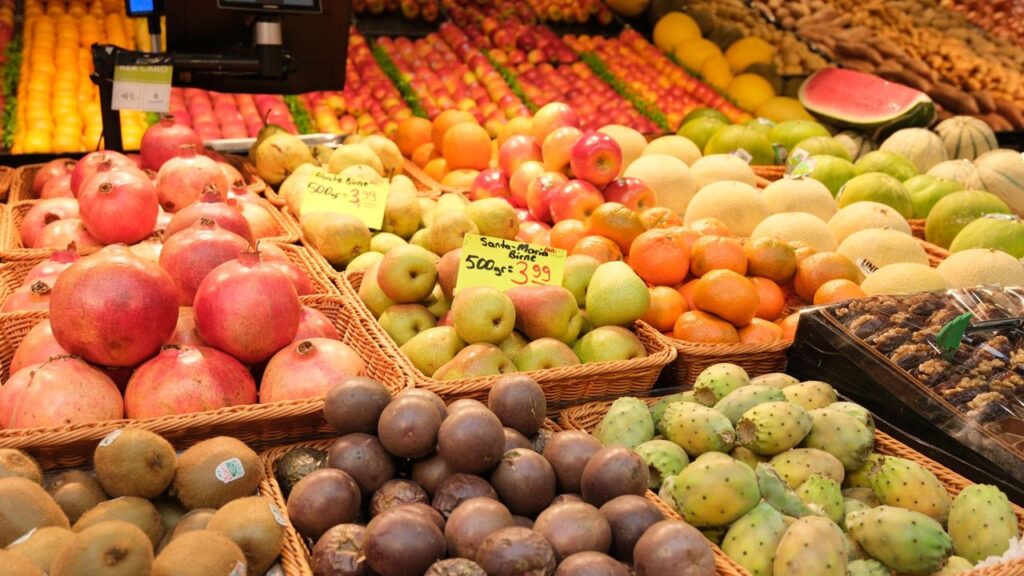
Walk down the produce aisle in November and you will see the whole autumn harvest piled together as if it all ripens on the same schedule. It does not. Pears sold rock-hard need days on the counter before they are edible, citrus is essentially finished ripening the moment it is picked, pomegranates behave almost like a sealed container that holds its contents steady for weeks, and root vegetables are less about ripeness than about how they were stored before they ever reached the store. Knowing which category each item falls into is the real trick to buying for tonight’s dinner without wasting what you meant to save for next week.
Pears for tonight: press gently just below the stem with your thumb. If that spot gives slightly, the pear is ready to eat today. A pear that is still rigid everywhere, including near the stem, needs another day or two minimum, sometimes four or five depending on the variety and how warm your kitchen is. Pears for later: choose the firmest ones in the bin and let them finish ripening on the counter, not in the refrigerator, which slows the process to a crawl. If you want pears ready in staggered order through the week, buy a mix of firmness levels in the same trip rather than returning to the store.
Why pears are the one item that actually changes day to day
Pears are unusual among common produce because they are typically picked and sold before they are ripe, then finish softening after purchase. That is why a pear that looked fine on Monday can turn mealy or overly soft by Thursday if it was already close to ready when you bought it. If your plan is a cheese board or a dessert for a specific evening, check that one spot near the stem on the day you intend to serve it, not when you buy it, since a pear can go from perfect to overripe within a day once it starts to give.
Citrus does not keep ripening, so look for weight instead of color
Oranges, grapefruit, and lemons are picked ripe and do not continue to sweeten or soften on your counter the way pears do. Color is a weak signal here because citrus can be fully ripe with a greenish patch near the stem, and conversely a very orange peel does not guarantee the fruit inside is juicy. A more useful habit is to pick up two fruits of similar size and favor the one that feels heavier, since weight usually tracks with juice content. Because citrus is already at its peak when you buy it, the real question for November shopping is not ripeness but how long you want to store it. A firm-skinned orange kept in the refrigerator crisper can hold its quality for a couple of weeks, while the same fruit left in a bowl on the counter in a warm kitchen will soften and lose moisture faster. If tonight’s recipe calls for juicing, reach for the heaviest fruit in the bag; if you are buying a bowl for snacking over the next week or two, firmness and unbroken skin matter more than squeezing for give.
Pomegranates reward a single check at checkout, then mostly wait
Unlike pears, a pomegranate is essentially done ripening by the time it is harvested, and its thick skin means it does not continue to change much once it is sitting in your kitchen. The useful check happens in the store: choose fruit that feels heavy for its size and has skin that looks taut rather than wrinkled, since weight is a reasonable stand-in for juicy arils inside. Once you have made that choice, a whole pomegranate can sit on the counter for about a week or in the refrigerator for considerably longer without much loss of quality, which makes it one of the few items on a November display genuinely suited to buying now and using whenever it is convenient, whether that is tonight’s salad topping or a garnish you had planned for a gathering next week.
Root vegetables are a freshness question, not a ripening one
Carrots, beets, turnips, and parsnips do not ripen after harvest the way fruit does; what you are really judging is how long they have been out of the ground and how they were handled afterward. Firmness is the main clue: a carrot or parsnip that bends before it snaps has already lost moisture and will taste duller than one that breaks cleanly. Beets and turnips should feel solid all the way through, without soft spots near the top where the greens were trimmed. If you are shopping for a dish tonight, the firmest, heaviest specimens will give the best texture immediately. If you are buying a bag to use gradually over the next week or two, root vegetables are forgiving storage-wise, especially kept cold and slightly humid, so the bigger risk is not ripeness changing but moisture slowly leaving the vegetable the longer it sits.
The pattern underneath all of this is simple once you see it: ask whether the item changes after you buy it. Pears do, dramatically and quickly, so match their firmness to your actual serving day. Citrus and pomegranates largely do not, so weight and skin condition at purchase matter more than timing. Root vegetables sit somewhere in between, holding steady for a while but slowly losing crispness, so firmness at the moment of selection is still your best guide whether dinner is tonight or a week from now.
Image Credit: Naz Kurtuluş — Pexels License / Pexels