
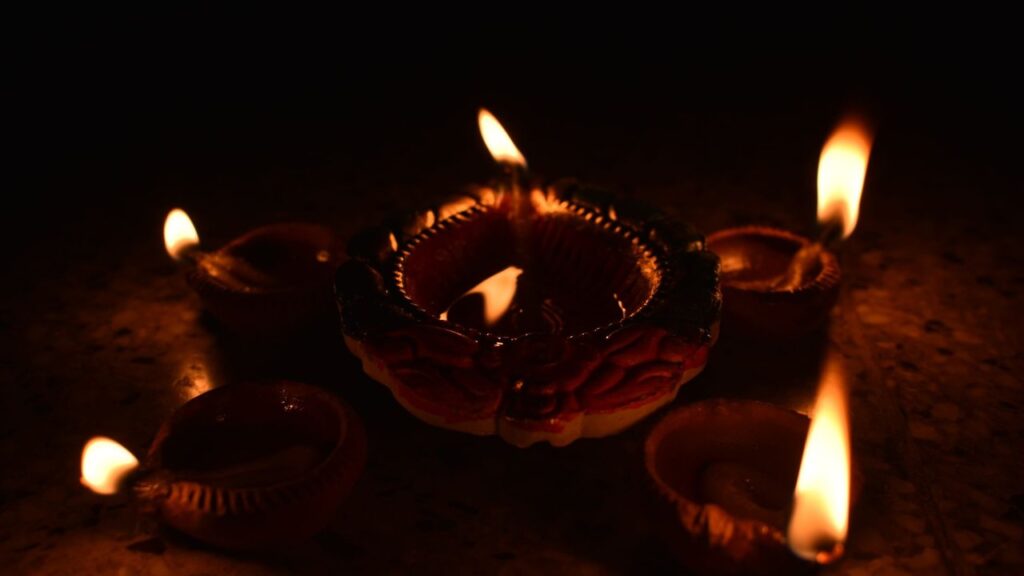
Diwali, the Hindu, Jain and Sikh festival widely known as the Festival of Lights, falls on a different date each year because it follows the lunar calendar, and in some years the main night lands in late October or even early November. That timing means community celebrations in places with large South Asian populations, including several Bay Area cities, often stretch across the following weeks as temples, cultural centers and family networks host their own gatherings on dates that work for them. For a family outside the tradition, that extended window is actually an invitation: there is more than one chance to see diyas lit, taste the sweets and understand why millions of people spend the holiday choosing light over darkness.
At its core, Diwali marks the symbolic victory of light over darkness and good over evil, though what that means depends on which tradition is celebrating. Many Hindu families associate the holiday with the return of Lord Rama to Ayodhya after defeating the demon king Ravana, and with inviting Lakshmi, the goddess of wealth and prosperity, into a freshly cleaned and lit home. Jain families mark the day Mahavira, the last of the Jain tirthankaras, attained liberation. Sikh families observe Bandi Chhor Divas, commemorating Guru Hargobind Sahib’s release from imprisonment and his insistence that other imprisoned princes be freed alongside him. These are distinct observances with their own histories, not interchangeable versions of the same story, even though they share the lighting of lamps as a central image.
What a family might actually see at a local celebration
Community Diwali events in a region with a significant South Asian population typically include small clay oil lamps called diyas lining doorways and windowsills, intricate rangoli patterns made from colored powder or flower petals on the ground, and strings of lights on homes and storefronts. Food is usually central: expect trays of sweets such as ladoo, barfi and jalebi, along with savory snacks like samosas, and in many communities a shared meal that brings extended family and neighbors together. Larger gatherings organized by temples or cultural associations often add music, classical or Bollywood-style dance performances, and sometimes a small market of vendors selling clothing, jewelry or home goods. None of this is staged for outsiders; it is simply what the holiday looks like when a community celebrates it fully, and a visiting family gets to witness that rather than a simplified version.
Why this matters more than a once-a-year outing
Attending a celebration outside your own tradition is less about checking a cultural box and more about noticing specifics: which prayer or story a family you meet is honoring, why a certain sweet is made only this time of year, how a grandmother explains the holiday to her grandchildren in her own words. Children in particular absorb these distinctions better through direct observation and conversation than through a worksheet, and a parent who asks genuine questions models curiosity instead of assumption. The goal isn’t to walk away able to summarize Diwali in one sentence, since no single sentence covers a holiday observed across three different religious traditions and countless regional customs within India and its diaspora.
How to take part respectfully as a visiting family
If a public event is open to the community, showing up, removing shoes where others do, and asking a host or organizer what is and isn’t appropriate to photograph or join in on will go a long way. If you’re invited into someone’s home, bringing a small gift and letting your host guide the evening rather than asking them to perform their culture for you keeps the visit about connection rather than spectacle. It’s also fine to simply say you don’t know a custom and ask; most families celebrating a holiday they care about are glad to explain it rather than annoyed by the question. Older children can be encouraged to notice the difference between a holiday’s religious meaning and its festive trappings, since fireworks and sweets are part of the celebration but not the reason for it.
The most useful thing a family can take from a Diwali gathering isn’t a photo of the lights, though those are worth taking. It’s the specific story someone told you about why their family lights those particular lamps, which is a better souvenir than any general description of the holiday could ever be.
Image Credit: Sayantan Das — Pexels License / Pexels