
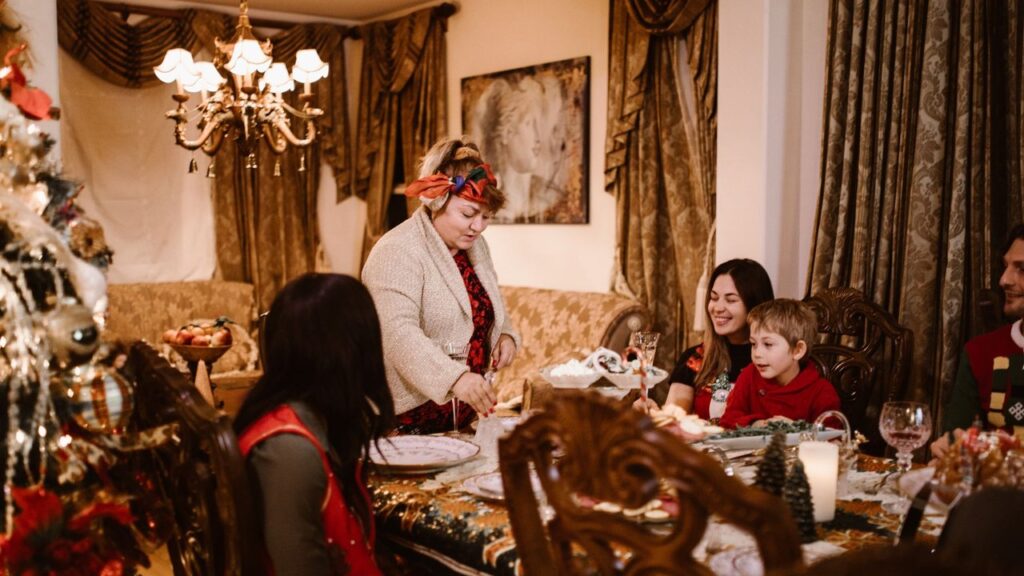
Every family has that one tradition nobody remembers choosing. The same ham on the same plate, the same seating chart, the same argument about who hosts. For a long time, nobody questioned it, because questioning it felt like questioning the people who built it. Now the younger people at that table are starting to ask why, and the answer isn’t always a comfortable one.
You’ve probably felt this pull from both sides. Maybe you’re the one gently pushing back on a tradition that never quite fit you. Maybe you’re the parent watching your adult child skip the thing you built your whole year around. Either way, it rarely feels like a small disagreement. It feels like a verdict on everything that came before.
When the holiday table stops feeling like yours
A lot of family traditions were never really decided on. They were inherited, repeated until they hardened into obligation. You show up because you showed up last year, and the year before that. Nobody sat down and asked if the schedule, the menu, or the guest list still made sense for the people actually in the room.
So when someone younger says they’d rather spend the holiday differently, it can land as rejection even when it isn’t one. You hear “I don’t want this” and translate it into “I don’t want you.” Those are two very different sentences, and most of the hurt in these conversations comes from mixing them up.
The traditions that were never actually about you
Some traditions exist because they genuinely bring people together. Others exist because they once solved a problem that no longer applies. A seating arrangement built around people who’ve passed away. A rule about who cooks that assumes roles nobody signed up for anymore. A gift exchange that quietly became a financial strain everyone’s too polite to mention.
It helps to separate the tradition from the person who loves it. You can honor your mother without keeping every ritual exactly as she built it. You can respect where something came from while still deciding it doesn’t need to continue forever. Traditions are supposed to serve the people living them, not the other way around.
Talking about it without turning it into a referendum
If you’re the one wanting change, lead with what you do want, not just what you’re rejecting. “I’d love to start a new tradition where we do this together” lands very differently than “I’m not doing that anymore.” You’re not auditioning for approval, but you’re also not trying to win an argument.
If you’re the one watching a tradition shift under you, try asking a real question before you grieve what’s being lost. What does she actually want instead, and why. Sometimes the answer has nothing to do with you at all. It’s about logistics, money, exhaustion, or simply wanting something that feels like theirs.
What you keep, what you let go
Not every tradition needs to survive, and not every change needs to be permanent. You’re allowed to keep the parts that still feel good and quietly retire the parts that don’t. A friend once told me her family finally dropped a decades-old gift ritual nobody enjoyed, and nothing fell apart. The relationships held. Only the obligation disappeared.
You get to be part of deciding what your family looks like next, even if that means fewer rules and more flexibility than the version you grew up with. The goal was never to recreate the past exactly. It was always to keep choosing each other, year after year, in whatever shape that ends up taking for you.