
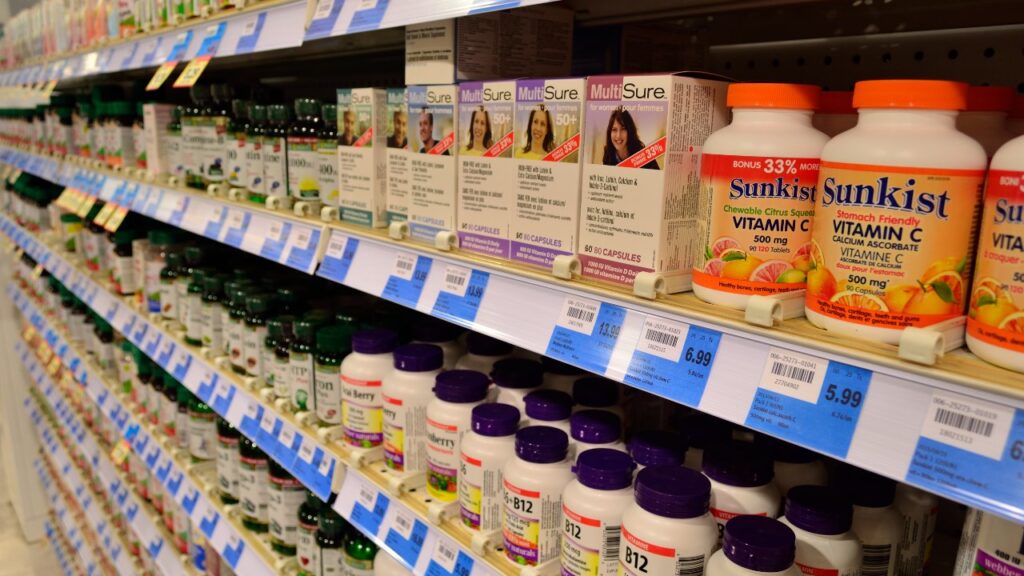
If there’s a vitamin bottle or two on your counter right now, you’re in the majority — and if it’s more than two, you’re still not unusual. A new Pew Research Center survey finds 82% of American women say they’re currently taking a vitamin or supplement, more than any other group measured. Here’s what the survey actually found, and what it doesn’t tell you.
The numbers behind the headline
Pew’s survey, published September 10, 2026, found that 78% of all U.S. adults currently take at least one supplement, with women at 82% compared to 74% of men. The research drew on 3,554 U.S. adults surveyed between July 6 and July 12, 2026, through the Center’s American Trends Panel.
What people take most: vitamins or minerals specifically, reported by 67% of all adults — the single largest supplement category Pew measured, ahead of specialty products like probiotics or herbal blends.
It isn’t just habit — most people genuinely believe it matters
Among adults taking vitamins or minerals, 62% called them “extremely or very important” to their health, and another 33% said “somewhat important.” That’s 95% combined who see real value in what they’re taking, not a routine they’ve stopped thinking about.
That conviction is worth noting on its own. A habit this widespread, held with this much genuine belief behind it, says something about how women specifically are thinking about their own health maintenance — proactively, and often without a doctor’s direct instruction behind every bottle.
What this survey does not establish
Pew measured usage and belief — how many people take supplements and how important they think those supplements are. It did not measure, and does not claim to measure, whether any specific supplement actually produces the health benefit someone believes it does. Those are two different questions, and it’s worth keeping them separate in your own head.
No single product or brand appears anywhere in the findings, and this survey isn’t a recommendation for or against anything in your cabinet — it’s a snapshot of what people are already doing and how they feel about it.
Why the gender gap might exist
Pew’s release doesn’t dig into why women report higher supplement use than men, but the pattern tracks with other measured health behaviors — women are consistently more likely to seek preventive care, track symptoms, and research health topics on their own time. Taking a daily vitamin fits that same proactive instinct, whether or not the specific product delivers everything hoped for.
It isn’t that women are more gullible about wellness marketing, a framing that shows up a lot in coverage of this topic. It’s at least as plausible that women are simply more engaged with their own preventive health across the board, and a vitamin bottle is one visible piece of a much bigger pattern.
What to actually do with a finding like this
You don’t need to change anything about your own cabinet because of a statistic. If you already take something daily, this is a reasonable moment to ask your own doctor or pharmacist whether it still makes sense alongside anything else you’re on — not because the Pew data flagged a problem, but because that’s a good periodic check regardless of what any survey finds.
Being part of an 82% majority doesn’t mean everyone in it needs the same thing, and it doesn’t mean the habit is automatically working the way you hope. It just means you’re not the only one in your kitchen reaching for the same bottle every morning.
This article was produced with the assistance of AI and reviewed by Womens Overview editors prior to publication.