
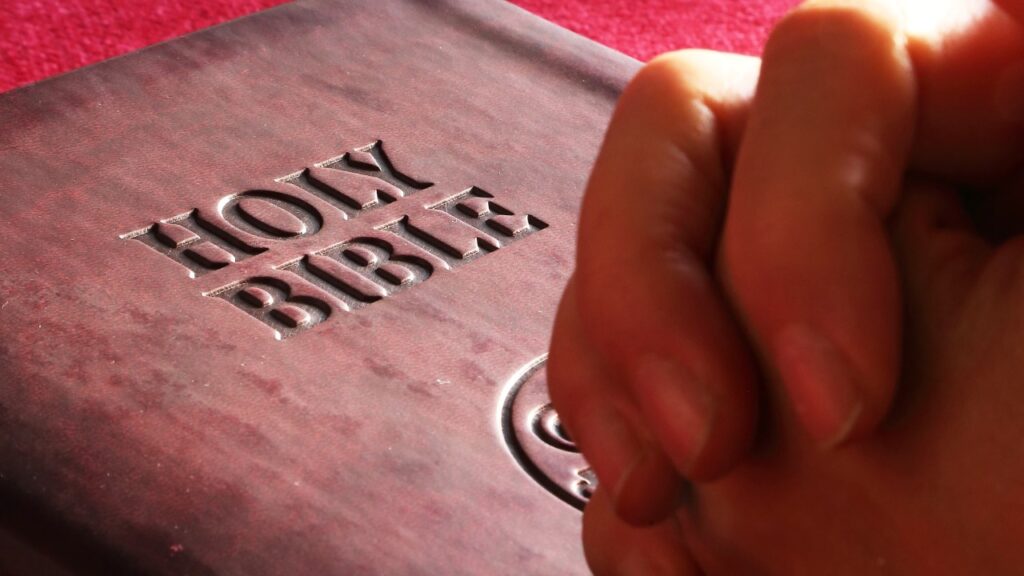
You’ve probably sat in a Bible study or a Sunday school class and quietly hoped nobody called on you for the detail you half-remember. A new survey suggests you’d have plenty of company. Most regular churchgoers, it turns out, would miss more questions than they’d get right — but the survey also points to the one habit that reliably changes the score.
What the quiz actually asked
Lifeway Research surveyed 2,012 American churchgoers — people who identify as Protestant, nondenominational, Catholic, or Orthodox and attend church in a typical month — online between August 12 and 29, 2026, with a sampling error of plus or minus 2.2%. Researcher Aaron Earls reported the results November 3 under the headline “2 in 3 Churchgoers Fail Bible Literacy Quiz,” a finding also picked up the same week by Baptist Press. The quiz itself ran dozens of questions across eight categories, and Lifeway says it picked examples meant to be significant rather than obscure — the goal, in the researchers’ words, wasn’t to trick anyone.
The number that explains the headline
The average churchgoer scored 51 on the quiz. Sixty-five percent — almost exactly two in three — scored an F, below 60. Only 9% cleared A territory at 90 or above. If you’d guess your own church’s Bible study crowd would land somewhere in the middle of that curve, the data says you’d probably be right.
That’s not a flattering number, and the survey isn’t trying to soften it. It’s also not a verdict on anyone’s faith. A quiz score measures recall of specific content, not the sincerity of someone sitting in the pew every week.
The one variable that actually moved the score
Here’s where the survey stops being just a discouraging headline and starts being useful. Churchgoers who read the Bible every day averaged 66 on the quiz. Churchgoers who say they rarely or never read it averaged 36 — nearly half the daily readers’ score, and 22% of all respondents fall into that rarely-or-never group.
That’s not a small gap. It’s the difference between passing and failing, and it tracks a habit, not a credential. Nobody in this survey scored well because they went to seminary. They scored well because they’d actually opened the book recently.
What this isn’t saying about you
It would be easy to read a stat like this and feel like you’re behind on something everyone else has figured out. You’re not. Two in three churchgoers failing the same quiz means failing it is the normal outcome, not the embarrassing exception. If you’ve ever skimmed a verse reference in a sermon and quietly hoped nobody would quiz you on the surrounding chapter, you were sitting in the majority the whole time.
What “daily” actually meant in the data
Lifeway’s survey didn’t ask churchgoers to read for an hour a day, and it didn’t require a particular translation, plan, or app. It simply sorted people by how often they open the text at all. The 66-versus-36 gap came from that frequency alone, not from depth, speed, or how much a person remembered in the moment of reading.
That matters because it means the bar the daily readers cleared wasn’t high. It was just more consistent than the bar the rarely-or-never group cleared. A few verses most mornings beats a long session once a month, at least by this measure — and that’s a far more forgiving standard than most people assume going in.
What the gap actually hands you
This isn’t a survey telling you to cram for a test you didn’t know was coming. It’s simpler than that — it’s a measured, specific reason to believe that reading a little more often would change what you remember, because it changed it for the people Lifeway actually surveyed. You don’t need a daily-reading streak that’s never broken. You need more days with the book open than without it, and the gap between 36 and 66 says that alone does most of the work.
So the quiz you probably would have failed tonight isn’t really the point. The habit the people who passed it shared is. You’re allowed to start wherever you actually are, read one page more than you did last week, and let the score take care of itself.