
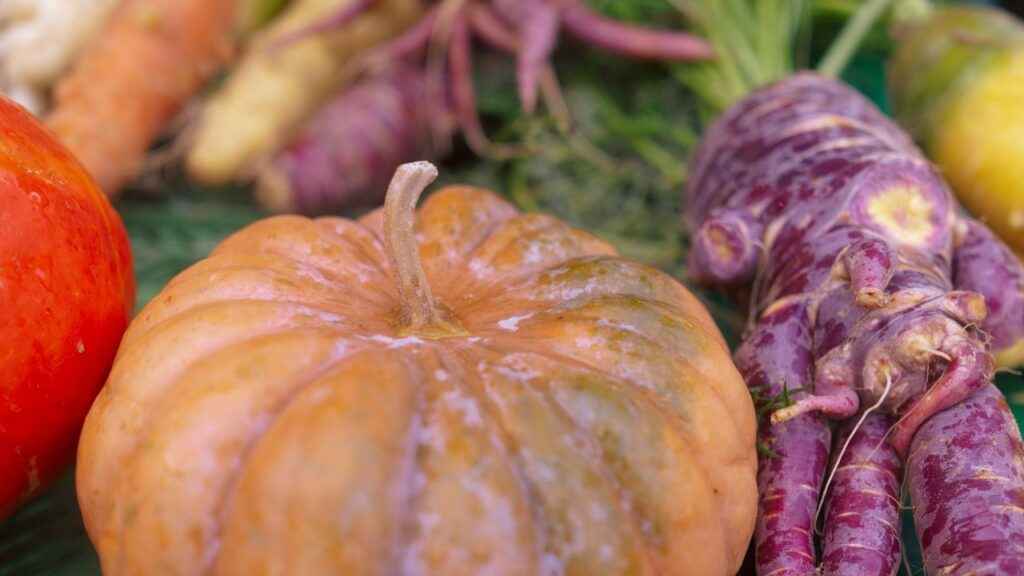
Walk past the pumpkin pile and the apple crates at a November farmers market and you will usually find the most interesting produce of the whole season sitting quietly at the back of the table. Cold-season vegetables like celeriac, parsnips, rutabaga, fennel, and the sturdier brassicas come into their own once nighttime temperatures drop, because cold weather sweetens many root vegetables and tightens the texture of winter greens. These are the vegetables worth filling a tote bag with before the market slows down for the season.
Celeriac
looks like a knobby, unglamorous ball of roots, which is probably why it gets passed over. Underneath that rough skin is a dense white flesh with a flavor somewhere between celery and parsley root. Peeled and cut into chunks, it roasts well alongside potatoes, and it can be boiled and mashed on its own or blended half-and-half with potatoes for a lighter, more savory mash. A vegetable peeler usually is not enough for the thick skin; a paring knife makes quicker work of it.
Parsnips
are an easy entry point if you have never cooked with cold-season roots before, since they behave much like a sweeter carrot. A hard frost before harvest tends to concentrate their sugars, which is part of why November parsnips often taste noticeably sweeter than ones sold in summer. Roasting brings out that sweetness fastest: toss peeled, cut parsnips with oil, salt, and a little black pepper, and roast at a high oven temperature until the edges caramelize.
Rutabaga
, sometimes sold as a swede, is a cross between cabbage and turnip with a dense, slightly peppery-sweet flesh. It holds up to long cooking times better than a regular potato, which makes it a useful addition to stews and braises that simmer for an hour or more. Cut into smaller cubes than you would use for potatoes, since rutabaga takes longer to soften, and it is worth peeling generously, as the skin is thick and waxy.
Fennel bulbs
bring a different kind of cold-weather value: a bright, anise-like crunch that works raw in salads even as everything else on the table turns heavier and more braised. Shaved thin with a mandoline or sharp knife, fennel pairs well with citrus and a simple vinaigrette, cutting through richer November meals. The feathery fronds at the top are also edible and make a decent stand-in for dill as a garnish.
Winter radishes
, including daikon and the pink-centered watermelon radish, are worth seeking out at a November market stand specifically because they are rarely available any other time of year at this size and quality. Unlike the small, peppery spring radishes most people know, these grow much larger and have a milder, slightly sweet flavor. They are good raw in thin slices, quick-pickled in a simple vinegar brine, or added to a stir-fry toward the end of cooking so they keep some bite.
Leeks
deserve a place in the bag too. Their mild, sweet onion flavor becomes the backbone of a good November soup, especially paired with potatoes in a classic potato-leek combination. Because dirt tends to hide between the layers near the root end, slice leeks lengthwise and rinse thoroughly under running water before cooking.
Brussels sprouts
sold still attached to their stalk are one of the more striking sights at a late-season market table, and they are worth buying this way if you have the refrigerator space, since they tend to stay fresher longer than loose sprouts. Roasting halved sprouts cut-side down at a high temperature until the outer leaves char slightly is a reliable way to get a caramelized, less bitter result than boiling.
Hardy winter squash
beyond the familiar pie pumpkin is another reason to linger at the produce stand. Delicata squash has thin, edible skin, so it needs no peeling, just halving and roasting. Kabocha squash has a drier, sweeter flesh that works well in soups where you want a thicker body without added cream. Acorn squash halves, roasted with a small pat of butter in the center, make an easy side dish that needs almost no preparation.
Hardy greens
like kale, collards, and mustard greens actually improve after a frost, since cold exposure tends to soften some of their natural bitterness. A quick sauté with garlic and a splash of vinegar at the end is usually enough; collards in particular benefit from a longer, slower braise if you have the time.
None of these vegetables need special handling once you get them home. Most keep for one to two weeks in a refrigerator crisper drawer, longer if left unwashed and wrapped loosely. The real decision at the market stand is less about technique and more about variety: a single pot of soup can hold leeks, parsnips, celeriac, and rutabaga together, which means one trip to the cold-weather table can cover several meals instead of just a pie.
Image Credit: Mariya Muschard — Pexels License / Pexels