
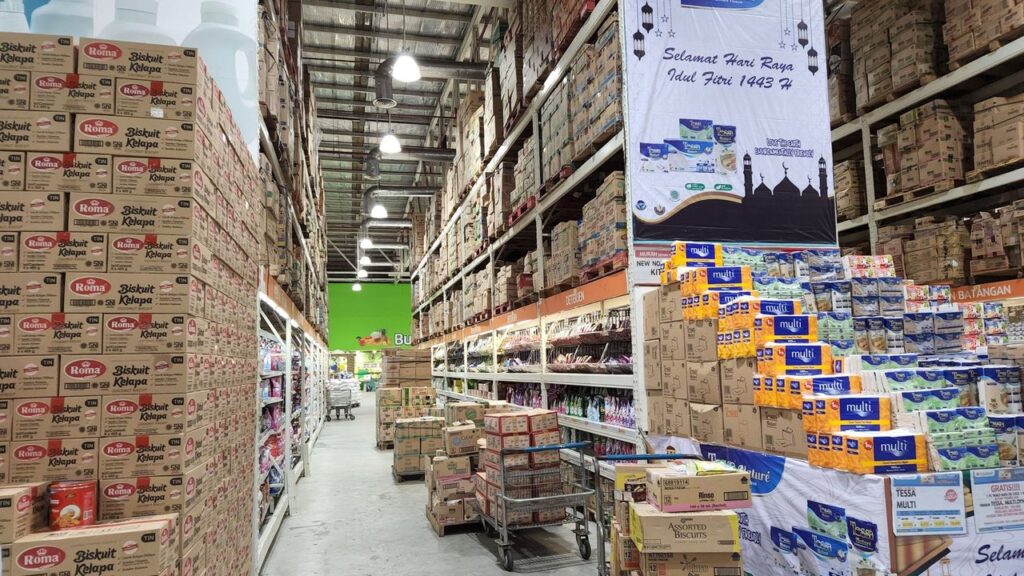
The math that finally changed my mind about bulk buying wasn’t complicated. It was just math I hadn’t actually done before. Dividing the sticker price by the number of servings I truly ate, instead of the number printed on the label, showed that some of my biggest bulk purchases were quietly more expensive than the small size sitting right next to them on the shelf — once spoilage, freezer space and how much we actually finished were factored in.
Bulk pricing is built around a simple promise: more volume for a lower price per unit. That promise holds up only if every unit gets used. The moment part of a bulk purchase goes stale, freezer-burns, or sits forgotten behind something else in the pantry, the real price per serving climbs — sometimes past what the smaller package would have cost in the first place.
The price tag that looks cheaper and isn’t
Picture a hypothetical, the kind many households could run with their own groceries: a sixteen-ounce bag of spinach priced at six dollars, sitting next to a six-ounce bag priced at three dollars. On paper, the bulk bag wins easily — thirty-seven and a half cents an ounce versus fifty cents an ounce. But spinach wilts fast. If only ten of those sixteen ounces get eaten before the rest turns slimy, the real cost works out to sixty cents an ounce for what was actually consumed. The smaller bag, fully used, would have been cheaper.
This is the distinction that unit pricing on the shelf tag doesn’t capture: it compares price per ounce as purchased, not price per ounce as consumed. A family that eats every bit of a bulk item comes out ahead. A family that routinely tosses a third of it does not, no matter how good the per-unit number looked at checkout.
What actually got used versus what ended up in the trash
The serving-size gap shows up differently depending on the category of food. Shelf-stable staples — rice, dried beans, pasta, oats — rarely go to waste from spoilage, so bulk pricing on those tends to hold up as a genuine saving as long as there’s dry storage space and no pest problems. Perishables behave very differently. Fresh produce, soft cheeses, bread and pre-washed greens have a short window before quality drops, and buying triple the volume doesn’t triple the number of days before that window closes.
Frozen bulk purchases sit in between. A large bag of chicken thighs or mixed vegetables can be an excellent value if it actually gets portioned and used over several weeks. If it instead gets pushed to the back of a full freezer and develops frost burn, the serving-adjusted price climbs the same way the spinach did — the food is technically still there, but it’s no longer something anyone wants to eat, which makes it functionally wasted even though it was never thrown away.
Household goods like paper towels, detergent or shampoo don’t spoil, so the waste risk there is different: it’s less about the product going bad and more about cash tied up in a giant container that takes months to work through, sitting in storage space that could otherwise be used for something else. That’s not a loss in the same sense as rotting food, but it’s worth naming honestly as a tradeoff rather than treating every bulk purchase of nonperishables as a pure win.
When bulk buying genuinely pays off
None of this means bulk buying is a trap. It means the savings are conditional, not automatic. Bulk purchases tend to work in a household’s favor when the item has a long shelf life, when the family’s consumption rate is steady and predictable, when there’s dedicated storage space to keep it in good condition, and when someone is actually tracking what’s on hand so nothing gets bought twice while an existing supply quietly expires.
A large household eating rice or oats daily, a family with a chest freezer and a weekly meal-prep routine, or a home that goes through the same brand of dish soap every month without fail — these are the situations where the lower per-unit price translates into a lower per-serving price too, because very little of what’s purchased ends up unused. The savings are real in these cases, but they depend on consistent habits, not on the bulk size itself doing the work.
The questions worth asking before the bulk aisle
A few honest questions before reaching for the larger package can do more than any general rule about bulk shopping. How fast does this actually get used in my kitchen? A realistic answer, based on how the last container of the same item was used, matters more than an optimistic guess. Where will it actually be stored, and will it stay in good condition there? A pantry shelf in a hot garage or an already-packed freezer changes the equation. What’s the real price per serving if only eighty percent gets used instead of one hundred percent? Running that adjusted number, even roughly, often reveals whether the bulk size is still the better deal once a reasonable waste margin is built in. Is there a smaller size available for comparison, or is bulk the only format offered? If there’s no alternative to compare against, the only real guard against waste is buying an amount that matches actual usage, not the biggest container on the shelf.
Price per serving, not price per unit, is the number that reflects reality in a kitchen. The shelf tag tells a household what the item costs if every bit of it gets used. Only the household itself knows whether that’s actually likely, and that knowledge — not the size of the package — is what decides whether bulk buying saves money or just moves the spending into something that ends up in the trash a few weeks later.
The membership fee that changes the math
Warehouse clubs add a layer to this that a straightforward unit-price comparison can miss entirely: the annual membership fee. That cost doesn’t show up on any individual price tag, but it’s still money spent in order to access the bulk pricing in the first place. A household that pays for a membership and visits only a handful of times a year is effectively adding a few extra dollars to the cost of every trip, which has to be factored in before the bulk savings can be called real. A household that shops there weekly spreads that same fee across far more purchases, so it barely registers in the per-serving math. The fee itself doesn’t change — what changes is how many servings it ends up divided across, which means the same membership can be a bargain for one family and a quiet loss for another, depending entirely on how often it actually gets used.
This is worth separating from the spoilage question discussed above, because it’s a different kind of leak. Spoiled spinach or freezer-burned chicken is money spent on food that never got eaten. An underused membership is money spent on access that never got taken advantage of. Both reduce the real savings bulk buying is supposed to deliver, but only one of them shows up as waste sitting in the trash — the other just shows up as a quiet subtraction from the bottom line that’s easy to overlook because no food was actually thrown away.
Running the numbers for a month, item by item
Picture a household that decides to track one month of bulk purchases the way described above, rather than guessing. A large bag of rice bought for the month gets fully used by the last week — shelf-stable, no waste, and the bulk price per serving matches the shelf tag exactly. A family-size tub of mixed greens bought the same week tells a different story: roughly a third of it ends up too wilted to use, which pushes its real per-serving cost close to what the smaller container would have cost, erasing most of the apparent discount. A large bag of frozen chicken thighs gets portioned into meal-size packs the day it comes home, and every portion eventually gets cooked, so its bulk price per serving holds up as a genuine saving. A gallon-size bottle of a specialty sauce bought on the same trip is still two-thirds full a month later, not spoiled, just slower to use than expected — not wasted food, but cash sitting in a cabinet that could have stayed in a smaller bottle and in the household’s pocket instead.
Laid out this way, the household isn’t left with a single verdict on bulk buying — it’s left with four different answers for four different items, which is closer to how the decision actually works in practice. Some categories reward buying big without much risk. Others only pay off with specific habits already in place. The value of tracking a month isn’t landing on one rule; it’s seeing, item by item, where the real savings are and where the bulk size was simply a bigger container for the same eventual outcome.
The simplest way to find out which category a given household falls into is to track one month honestly: write down what was bought in bulk, what fraction of it actually got eaten or used, and what got thrown out or forgotten. Dividing the original price by the servings actually consumed, rather than the servings printed on the label, turns a vague feeling about bulk buying into a specific number — and that number, item by item, is a far better guide than any general rule about buying big to save money.
Image Credit: Antonius Natan — Pexels License / Pexels