
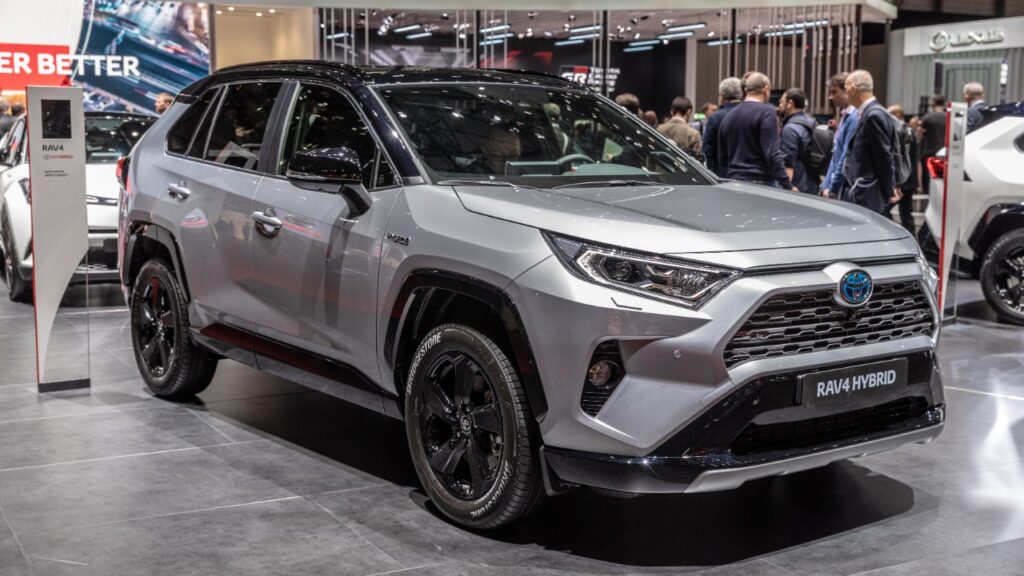
You don’t think about your airbag until the moment you need it. It’s one of those safety features you trust blindly — tucked behind the dashboard, doing its job without being asked. Toyota just gave about 314,000 owners a reason to think about it anyway, because the front passenger airbag in certain Toyota and Lexus vehicles can turn into the hazard instead of the protection.
What’s actually wrong with the airbag
The front passenger airbag in the affected vehicles was built with a Takata inflator. The propellant inside that inflator can degrade over time, depending on age, temperature and humidity. Toyota’s own November 12 recall notice says a degraded inflator can rupture if the airbag ever deploys. When it ruptures, it sends metal fragments through the airbag and into the vehicle interior at high speed.
Toyota is blunt about what that means. The company’s recall announcement states the rupture “may result in injury or death to vehicle occupants.” That’s not a defect that makes your airbag stop working. It’s one that can make it actively dangerous in the exact moment you’re relying on it most.
The number behind this recall: 314,000 vehicles
Approximately 314,000 vehicles in the U.S. are covered. That spans both the Toyota and Lexus brands. What Toyota hasn’t done in its public announcement is name the specific models or model years — the release refers only to “certain Toyota and Lexus vehicles.” You can’t rule yourself in or out from memory or a guess.
That gap is deliberate, not sloppy. The exact list of covered vehicles lives in Toyota’s recall database, tied to vehicle identification numbers. If you own any Toyota or Lexus built in the last several years, this is worth five minutes of checking. Don’t assume it doesn’t apply to you.
How to find out if yours is one of them
You don’t need a dealer to tell you first. Toyota’s notice points owners to two places — Toyota.com/recall and nhtsa.gov/recalls. Enter your Vehicle Identification Number or your license plate number, and you get an answer immediately, specific to your car.
Your VIN is on your registration, your insurance card, and the lower corner of your windshield on the driver’s side. If you don’t have either document handy, the windshield works in under a minute. Do this before you read the rest of this article. Everything that follows only matters if your particular vehicle is actually included.
What happens if your car is on the list
For every vehicle covered by this recall, Toyota and Lexus dealers will replace the front passenger airbag inflator, or replace the entire airbag assembly, depending on the model. It’s free of charge. You don’t pay for the part, the labor, or the diagnostic time to confirm it’s needed.
Toyota’s customer support line is open for questions beyond what the website can answer: the Toyota Brand Engagement Center at 1-800-331-4331. You’re not expected to navigate a recall alone. Calling isn’t an admission that something’s already gone wrong — it’s just how you book the appointment.
This notice stands on its own
Maybe your car has had other recall work done before, airbag-related or not. That history doesn’t tell you whether this specific notice applies to you. Each Takata-related recall campaign covers a defined set of vehicles tied to specific build windows and inflator batches. It isn’t a blanket “your airbags are fine now” clearance that carries forward.
That’s the slightly annoying truth about recalls like this one. A clean record on an old notice isn’t the same as a clean record on this one. The VIN check is what actually tells you — not your memory of a dealer visit from a few years back.
Zero injuries reported doesn’t mean zero risk
As of Toyota’s filing, no injuries have been tied to this recall. That’s genuinely good news. It’s also exactly the moment a recall is supposed to work: catching a degradation risk before it becomes a story about someone who got hurt, not after. Toyota didn’t wait for an incident to act on this one.
A recall with zero reported injuries is not a recall you can safely file away. The entire point of catching this now, rather than after a deployment, is that nobody has to be hurt first for the fix to matter to you.
If you try one thing today
Check your VIN. It takes less time than finishing this article. It’s the only thing that actually tells you whether any of this applies to your car — not the model year you remember, not whether you’ve “already dealt with a recall” before. Toyota.com/recall and nhtsa.gov/recalls both take it in seconds.
If your vehicle comes back covered, you don’t have to wait on a letter to show up before you act. You can call and schedule the free repair today. And if it comes back clear, you’ve spent five minutes confirming your car isn’t one of the 314,000 — which is five minutes well spent either way.