
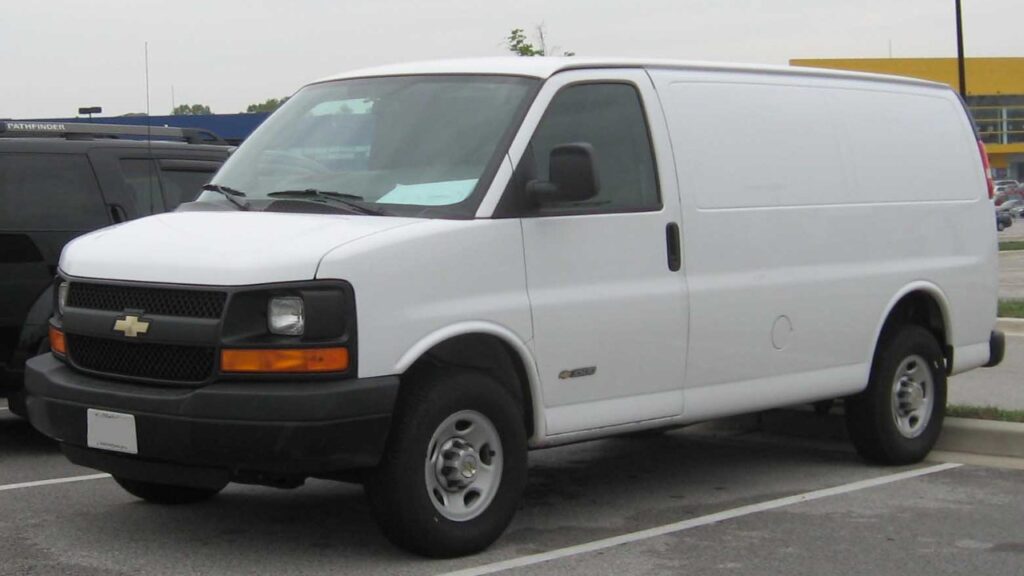
If you drive a full-size Chevrolet Express or GMC Savana van, here’s something worth five minutes before your next long drive. General Motors says about 12,715 of these vans could suddenly lose steering control, because of a nut that was never tightened the way it should have been on the assembly line.
You don’t have to be a mechanic to understand the risk. A steering system that can come loose isn’t a warning-light problem. It’s a lose-control-of-the-vehicle problem, and GM is treating it that way.
Where this actually started
The root cause traces back to Nexteer Automotive, the supplier that makes the steering components for these vans. An improperly tightened nut in the steering gear assembly can work its way loose over time, especially with everyday driving vibration.
This recall doesn’t stand alone. It’s connected to an earlier action, recall 26V399, which covered a related steering defect from the same supplier relationship. GM is treating this as a continuation of that problem, not a brand-new, unrelated issue.
That connection matters for you if you already had work done under the earlier recall. It’s worth checking whether this new one covers your van too, rather than assuming one fix means you’re done.
How the numbers break down
Of the roughly 12,715 vans affected, GM’s own breakdown splits the count into two groups: about 8,693 and about 4,022, reflecting different production windows and build details where the same loose-nut defect can occur.
What that split means for you: it’s not that one group is more dangerous than the other. It’s that GM identified two separate production runs where the same supplier issue showed up, and both need the same inspection.
Either way, the fix is the same once your van is confirmed to be on the list — there’s no version of this where one group gets a lesser repair.
What GM is doing about it
Owner notification letters are set to go out starting December 14, 2026. If your van is affected, that’s when you should expect to hear from GM directly, by mail, with instructions.
The remedy is a dealer inspection of the steering gear assembly, with the nut re-torqued to the correct specification — or replaced if a dealer finds it’s already caused wear. This is a free repair under the recall; you should not be asked to pay for it.
You don’t need to wait for the letter if you’re worried now. Any GM dealer can run your VIN and tell you on the spot whether your specific van is part of this.
If you already dealt with the earlier recall
Don’t assume a prior repair means you’re covered this time. The earlier recall, 26V399, addressed a related but distinct part of the same steering assembly, and GM’s records on who got which fix aren’t always perfectly synced with what a dealer’s system shows at a glance.
The safest move is to ask your dealer directly whether your van’s VIN shows an open recall under this new campaign, even if you have paperwork showing the last one was completed.
It costs you nothing to ask, and it closes a gap that’s easy to assume away if you’re just going on memory of “I already had that fixed.”
What to do between now and your appointment
Pay attention to how the steering feels on your next few drives. Looseness, a delay between turning the wheel and the van responding, or any new noise from the front end are all worth mentioning to your dealer, even before your letter arrives.
How to check your VIN now: GM’s recall lookup tool only needs your 17-character vehicle identification number, found on your registration, insurance card, or driver’s-side door frame.
If you drive one of these vans for work — deliveries, a small business, a church or school route — this is worth doing today rather than waiting for a letter that might sit in a stack of mail for a week.
Why GM is treating this as urgent
A recall tied to steering control isn’t a check-the-box formality. It’s GM saying, in writing, that there’s a real way this part can fail while you’re driving, and they’d rather fix 12,715 vans than wait for a smaller number of them to fail on the road.
This also isn’t a reason to be afraid of your van generally. It’s one identified defect, from one supplier relationship, in two specific production windows — not a verdict on the vehicle as a whole.
The bottom line: check your VIN, watch for the December letter, and get the inspection done once it’s offered. It costs you nothing and it closes the loop on something GM has already told you is worth closing.