
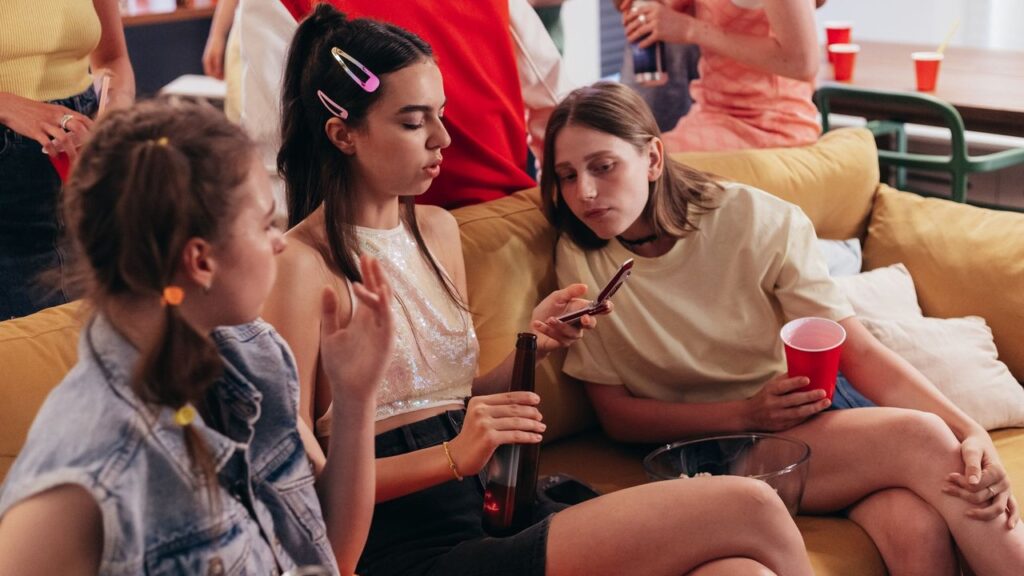
You know the feeling. You are laughing with your friends at dinner, and somewhere in the middle of the laugh, part of you steps outside the moment to think about how it will look on your phone. The night stops being just a night. It becomes content you are building in real time.
This is not vanity, even though it gets called that. For a lot of young women, documenting a moment has quietly become the way you prove it happened, prove you were wanted there, prove your life looks the way it is supposed to look from the outside. The camera stops being a way to remember and starts being a way to perform.
Where the pressure actually comes from
Nobody hands you a rulebook that says you must post the brunch, the trip, the new haircut. It builds slower than that. You see everyone else’s highlight reel and start measuring your own life against it, forgetting theirs is edited too. Over time you stop asking whether a moment felt good and start asking whether it will read as good to someone scrolling past it in three seconds.
You start narrating your own life before you have even finished living it. A friend once told me she caught herself mentally drafting a caption while she was still crying at a wedding, and that was the moment she knew something had shifted in her.
When the phone starts outranking the room
The tell is small but it adds up. You take the photo before you take the moment in. You reshoot the candid because the first one did not flatter you enough. You leave a gathering already thinking about which version of the night you will present, instead of thinking about the people who were actually in it with you.
None of this makes you shallow. It makes you human in a world that rewards visible proof of a good life over the quiet, undocumented kind. But it does mean you can walk away from a wonderful evening feeling strangely empty, like you attended your own life as a spectator instead of living it.
What it costs you when every moment is a draft
Performing joy and feeling joy are not the same thing, even though they can look identical in a photo. When you are constantly curating, you lose the ability to just be bored, messy, or unphotogenic in front of people you love. You start editing yourself even in private, because the habit of performance does not switch off just because no camera is out.
The friendships that matter most usually survive on the moments nobody documents. The car ride where you said nothing interesting. The ugly-cry phone call. The version of you with no filter and no caption, because that is the version your real friends actually chose.
Letting a moment just be the moment
You do not have to swear off your phone to loosen this grip. Try leaving it in your bag for the first twenty minutes of a gathering, just to feel what unrecorded time feels like again. Notice how your body relaxes when you are not quietly staging yourself.
You can still take the photo. You can still share it. The difference is whether the photo serves the memory, or the memory gets bent into shape to serve the photo. One of those lets you actually be there. The other one just lets you look like you were.
Next time you feel that familiar urge to step outside a good moment and frame it, give yourself permission to stay inside it instead. The people across the table came for you, not your highlight reel. Let them have the real version. You deserve to have it too.