
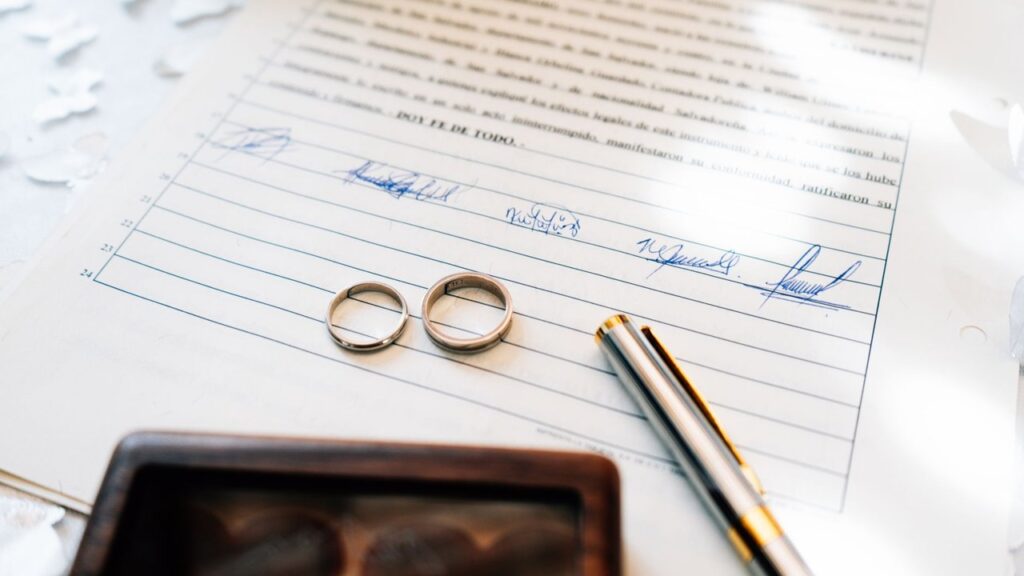
Changing your name after a wedding sounds like paperwork until you actually sit down to do it. You cross out your maiden name on form after form and watch a version of your identity get quietly retired. Nobody warns you how strange that feels, especially when the new name carries a different racial weight than the one you grew up with.
You think you are prepared for the logistics — the new license, the new cards, the new email signature. What you are not prepared for is how differently people treat you once your name no longer matches your face.
When the name walks into the room before you do
You notice it first in small interactions. A reservation gets confirmed faster. A customer service call goes smoother. You start to wonder if you are imagining the shift, and then it happens again, and you realize you are not imagining anything. Your new last name arrives in a room a few seconds before you do, and it changes how that room responds.
That realization can sit uncomfortably in your chest. You did not take the name to access anything. You took it because you love your husband and it felt like the natural next step. But love does not cancel out the fact that a name can function like a key, opening doors that stayed shut for you before.
What it stirs up with your own family
Your parents might have mixed feelings they never say out loud. Maybe your mother jokes about missing her maiden name on your mail, but you can hear something underneath the joke. Maybe your father goes quiet when you mention the name change, not out of disapproval, but out of some complicated grief about legacy and lineage he was not expecting to feel.
You carry your original name for decades. It holds your childhood, your culture, your people. Setting it aside, even partially, even lovingly, can feel like setting down a small piece of your own history. That does not mean the decision was wrong. It means it was bigger than you expected, and it is fair to let it be complicated instead of forcing it into something simple.
How your in-laws start seeing you differently too
Sharing a name with your husband’s family can soften edges that used to feel sharp. Relatives who were polite but distant might suddenly treat you like you fully belong, as if the name confirmed something they were waiting to believe. You notice the shift and you feel two things at once — gratitude for the warmth, and a quiet discomfort that it took a name to get there.
You start paying closer attention to how you are treated in rooms you used to enter as an outsider. You clock who assumes things about you now that they did not assume before. None of this makes you less yourself. It just means you are seeing your marriage, and your husband’s family, with a clarity you did not have on your wedding day.
Carrying two identities without losing either one
You do not have to pick a side between the woman you were and the woman your new name points to. You can keep your maiden name alive in the way you introduce yourself to old friends, in the stories you tell your kids someday, in the parts of your culture you keep front and center no matter what your driver’s license says.
A name change does not erase where you came from. It adds a layer on top of it, and some days that layer feels like protection, other days like a question you are still answering. You get to decide, slowly and on your own timeline, what this name means to you and how loudly you want your original name to still speak for who you are.