
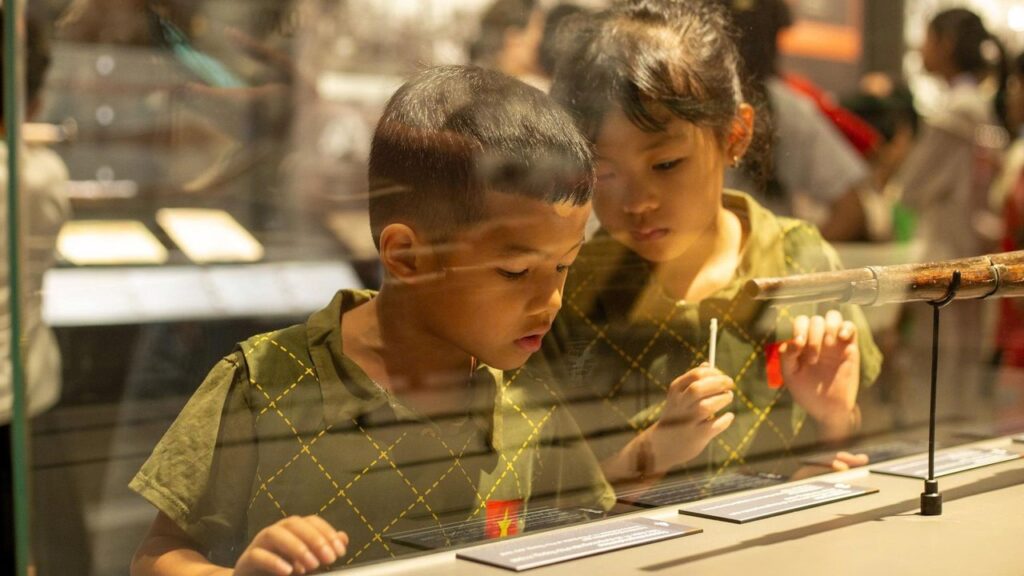
A two-hour museum visit with a four-year-old often beats a six-hour one, and the reason has nothing to do with how interesting the exhibits are. It comes down to timing the outing to match a child’s patience instead of the museum’s full catalog. Choosing three or four exhibits in advance, building in rest stops, and accepting that you will skip most of the building can turn a stressful afternoon into one everyone actually remembers fondly.
Families tend to plan museum trips the way they plan amusement park trips: arrive early, see everything, get your money’s worth. That approach works reasonably well for adults wandering at their own pace, but it falls apart with a toddler or preschooler in tow. A child who is delighted by a dinosaur skeleton at ten in the morning can be melting down over a gift shop pencil by one in the afternoon, not because the museum failed to hold her interest, but because hours of walking, bright lights, echoing rooms and constant new stimulation are simply tiring in a way that has nothing to do with boredom.
Why a shorter visit often produces a happier one
An afternoon slot, say ninety minutes to two hours, works with a young child’s rhythm instead of against it. There is a clear beginning, middle and end, which makes the outing feel manageable rather than open-ended. A shorter visit also keeps the inevitable protest or restlessness from dragging into exhaustion, because you leave the building while everyone still has some patience left rather than staying until it runs out. This is simply a scheduling choice, not a guarantee that a child will behave a certain way or that any particular timing works for every family.
Picking exhibits before you walk through the door
Trying to decide what to see once you are already inside wastes the best part of a child’s attention span on hallway debates. Look at the museum map ahead of time, whether online or on a printed brochure, and choose two or three sections that genuinely suit your child’s current interests: a dinosaur hall for one family, a hands-on science room for another, a small aquarium tank for a toddler who likes watching movement. Resist the instinct to also squeeze in the gift shop favorite from last time, the special exhibit your sister mentioned, and the gallery you personally want to see. Three good stops, fully enjoyed, beat eight rushed ones where nobody actually looked at anything.
Reading the signs before the meltdown arrives
Young children rarely announce that they are overwhelmed in clear language. More often it shows up as suddenly refusing to walk, clinging to a leg, asking for snacks that were already eaten, or getting silly and loud in a way that reads as misbehavior but is really overstimulation. Building a pause into the plan, a bench, a quiet corner, a snack break, before those signs show up tends to work better than waiting to react once a child is already past the point of being reasoned with. If a planned exhibit turns out to be too loud, too dark or too crowded once you arrive, it is worth skipping entirely rather than pushing through for the sake of the itinerary.
Letting one exhibit replace five
Part of what makes a full day overwhelming is the pressure to keep moving so nothing gets missed. A shorter, more deliberate visit removes that pressure. If your child wants to stand at the butterfly enclosure for twenty straight minutes, let the rest of the planned stops go. That kind of unhurried attention is exactly the experience museums are good for, and it is far more memorable to a young child than being pulled through four additional rooms she will not remember by dinner. Treat the plan as a loose menu of options rather than a checklist that must be completed.
Deciding when a return trip beats pushing through
Most museums that families visit regularly, whether through a membership or simply a nearby favorite, are not a once-a-year event. That changes the math on what counts as a successful visit. Seeing one wing well and coming back another day to see a different one is not a failure to get your money’s worth; it is often the more enjoyable way to experience a large museum with small children, especially if a membership or season pass is already part of the family’s routine. For a one-time visit to a museum you are unlikely to return to soon, it makes sense to prioritize the one or two things your child most wants to see and treat anything beyond that as a bonus rather than an obligation.
The real decision criterion is simple: plan the visit around your child’s patience rather than the museum’s size, pick a small number of exhibits in advance, and leave while everyone is still having a good time rather than staying until someone isn’t. A shorter afternoon spent fully present at two exhibits will almost always be remembered more fondly than a long day spent marching past twenty.
Image Credit: Thọ Phan — Pexels License / Pexels