
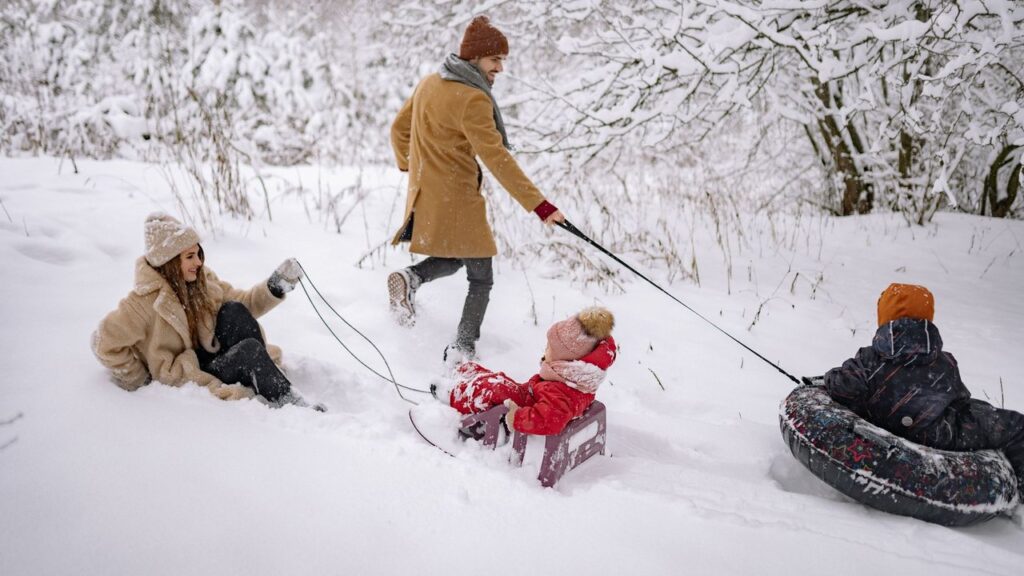
Once the temperature drops, most families pack away the sunscreen along with the beach towels—but ultraviolet light does not check the thermometer before it reaches your skin. A cold November afternoon spent sledding, hiking, or just raking leaves in the yard can expose a family to meaningful sun just as easily as a July day at the pool, because the sun’s rays, reflected light off snow or pavement, and higher elevation on a mountain trip all work independently of how warm or cold the air feels.
Temperature and UV exposure are two separate things. Heat comes from infrared energy, while sunburn and skin damage come from ultraviolet radiation, and the two don’t rise and fall together. A crisp, 40-degree day can still deliver a strong dose of UV light if the sky is clear, especially around midday. This is easy for a family to overlook on a cool-weather outing, because the usual cues—feeling hot, sweating, wanting shade—simply aren’t there to prompt sunscreen use the way they are in summer.
Why snow and ice bounce the sun right back at your face
Fresh snow is highly reflective, sending a meaningful share of UV light back upward rather than absorbing it the way grass, soil, or pavement typically do. That means a child building a snowman or a parent shoveling the driveway can be hit by both the direct sun overhead and a second dose bouncing up from the ground below, often landing on areas people rarely think to cover, like the underside of the chin, the nostrils, and the eyelids. Families who ski or sled in November are especially exposed to this kind of double hit, since open, snow-covered terrain offers little in the way of natural shade.
What changes when a family trip goes up in elevation
Altitude matters because the atmosphere thins as you climb, and thinner air filters out less UV radiation before it reaches the ground. A family driving up to a mountain town for a weekend of hiking or early-season skiing is typically exposed to more intense UV light at the summit than they would be at sea level on the very same clear day. Combine that higher baseline with reflective snow at higher elevations, and a short afternoon outdoors can add up to more sun exposure than a full beach day back home, even though everyone is bundled in jackets and feels perfectly cool.
Why a few hours outside in November adds up more than it seems
Cold-weather outings tend to run longer than people expect. A trip to a pumpkin patch, a weekend hike, or an afternoon at a youth soccer game can stretch across several hours without anyone noticing, partly because discomfort from heat isn’t there to cut the outing short.
Building sun protection into cold-weather family routines
The simplest fix is folding sunscreen into the same pre-outing routine families already use for coats, gloves, and boots. Choose a broad-spectrum formula: look for a sunscreen labeled broad-spectrum, which protects against both UVA and UVB rays, rather than one that only addresses burning. Cover the spots jackets miss: face, ears, lips, and the back of the neck are the areas most often left bare during a cold-weather outing, so they deserve deliberate attention even when the rest of the body is layered up. Reapply after sweating or wiping faces: kids especially tend to rub their faces with mittens or scarves, which can remove sunscreen well before an outing ends, so a midday reapplication is worth building into a ski day or long hike. Use lip balm with SPF: lips burn easily in reflective, high-altitude conditions and are frequently forgotten entirely. Pack sunglasses for everyone, including children: reflected light off snow affects the eyes as much as the skin, and a cheap pair of kid-sized sunglasses can make a bright, snowy afternoon far more comfortable.
None of this requires treating November like August. It just means recognizing that a family’s actual sun exposure depends on reflection, elevation, and how long everyone stays outside—not on how cold it feels when you step out the door. A short, deliberate habit of applying sunscreen before a cold-weather outing, and reapplying it if the outing runs long, closes the gap between how safe an afternoon feels and how much sun a family is actually getting.
Image Credit: Yan Krukau — Pexels License / Pexels