
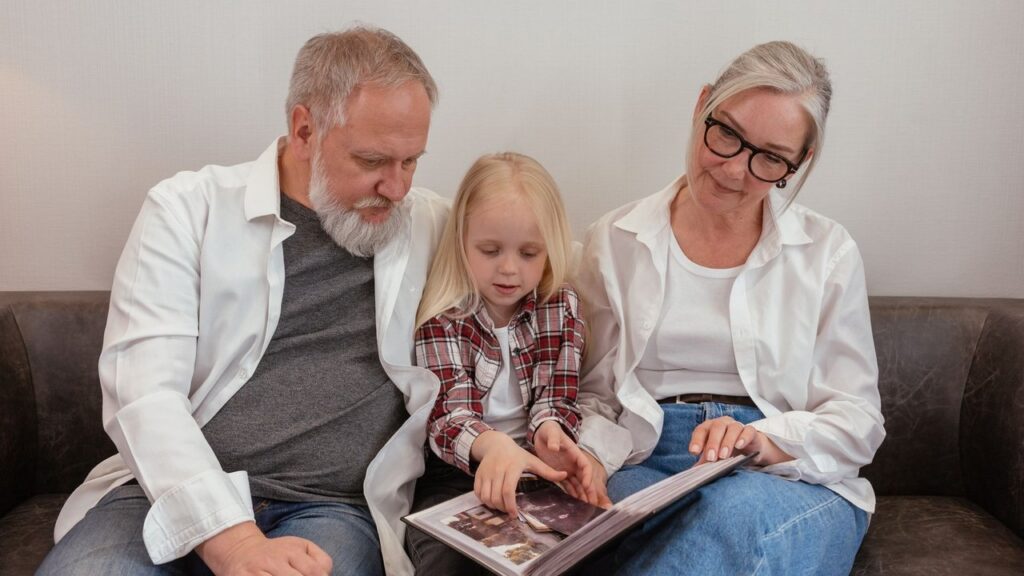
Most grandchildren can describe a grandfather’s laugh, his favorite chair, the way he tells the same joke every holiday. Far fewer can tell you where he was stationed, what frightened him, or who he lost. The gap isn’t neglect so much as timing: children don’t know which questions matter until they’re older, and by then the stories may be harder to reach. The good news is that the right questions, asked gently and without pressure, can open doors that have been closed for decades.
Veterans often don’t volunteer their service history unprompted, not because they don’t want to be known, but because nobody has asked in a way that felt safe. A grandchild who simply says what was basic training actually like invites a very different response than a vague tell me about the war. Specific, low-stakes questions tend to work better than sweeping ones, especially at first.
Starting with the ordinary, not the dramatic
It can help to begin far from combat altogether. Questions about daily routine, food, friendships and boredom often unlock memory more easily than questions about danger. What did you eat most days? Who was your closest friend in your unit, and what happened to him afterward? What did you do for fun when you had a free afternoon? These questions treat service as a lived experience rather than a single dramatic event, and that framing often makes a veteran more willing to keep talking.
The questions about before and after
Service doesn’t exist in isolation. Asking what a grandfather was like before he enlisted, why he chose that particular branch, or what he imagined his life would look like when he came home can reveal as much about him as any battlefield story. What were you doing right before you joined? Did you choose this, or were you drafted? What did you think your life would look like afterward, and how different did it turn out to be? These questions connect his service to the rest of his life, rather than treating it as a separate chapter that ended when he came home.
Questions that honor what may be hard to say
Some memories are painful, and a grandchild asking out of love still has to leave room for a grandfather to decline. A gentler approach is to ask about the question itself rather than demand the memory: is there anything from that time you’d rather I not ask about? or what do you wish people understood about what you went through, even if you don’t want to describe it in detail? This gives him control over the boundary while still inviting him to share what he’s comfortable sharing. If he changes the subject, that answer deserves respect, not a follow-up question trying to get there anyway.
Questions about the people who didn’t come home with him
Many veterans carry quiet grief for friends who didn’t survive, and that grief rarely comes up unless someone asks directly and kindly. Was there someone you served with who you still think about? Did you stay in touch with anyone afterward, or did those friendships fade? These questions can be heavy, so they’re best asked when there’s time to sit with whatever answer comes, not squeezed in before a holiday dinner gets interrupted.
Questions about objects, photos and small details
Sometimes the easiest way into a story is through a physical object: a medal, a photograph, a patch, a letter. What’s this from, and why did you keep it? is a low-pressure way to let him choose what he wants to explain, rather than a grandchild choosing the topic for him. Objects often carry stories that a direct question never would have reached, because the veteran gets to decide how much context to give.
Why the record matters more than the retelling
A single conversation, however meaningful, is easy to lose to memory. Writing down a few sentences afterward, or recording the conversation with permission, turns a fleeting exchange into something that can be passed to the next generation intact. It doesn’t need to be a formal oral history project. A grandchild jotting a few lines in a notebook after a visit, or asking if it’s alright to record on a phone, is often enough to preserve details that would otherwise blur over time.
None of these questions guarantee a grandfather will open up fully, and that’s not a failure. Some stories stay private for good reasons, and respecting that boundary is part of the relationship too. But asking at all, with patience and without forcing an answer, is often what makes the difference between a grandchild who only knew Grandpa and one who eventually understood who he was before that name ever applied to him.
Image Credit: Mikhail Nilov — Pexels License / Pexels