
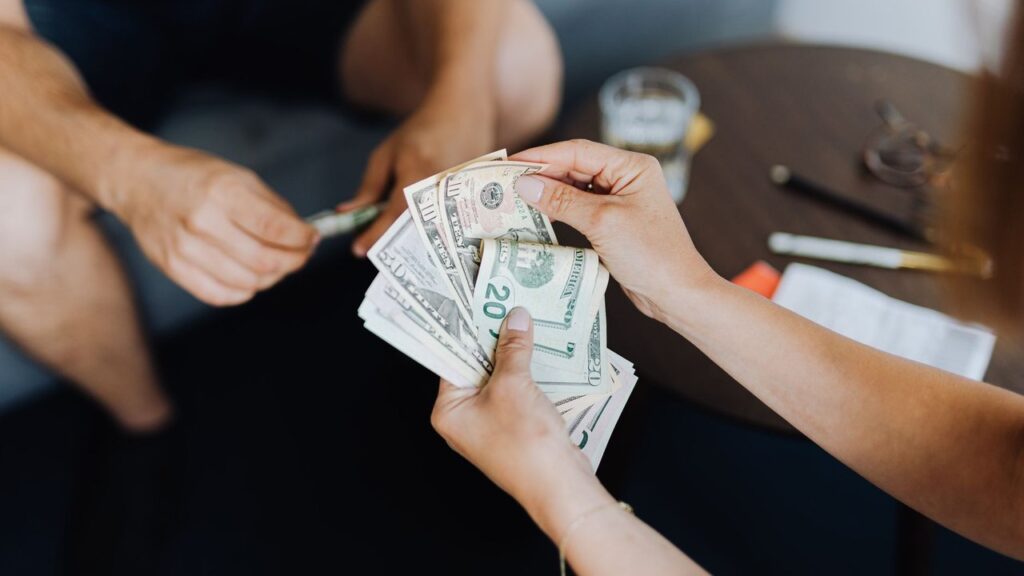
When a teenager who used to guard every dollar suddenly starts picking up the tab for friends at lunch, it is easy to read that as generosity or even recklessness. But developmental psychologist Nancy Hill of the Harvard Graduate School of Education points out that peer pressure is not only something other people impose on a teen. Often it is an internal pull, a desire to belong that pushes a teen toward behavior they would not choose entirely on their own. A sudden pattern of treating the group may be less about the money and more about securing a place inside it.
Hill explains that teens are especially sensitive to this pull because adolescence is the stage when kids first become able to imagine, in an abstract way, how others are perceiving them. That new capacity cuts both ways. It lets a teenager read a room and sense who is included and who is on the edge, but it also makes them more willing to shape their own behavior, including how they spend, to control that image. A teen who feels uncertain of her footing in a friend group may calculate that covering the bill buys a kind of insurance against being left out. Teens, Peer Pressure, and Mask Mandates | Harvard Graduate School of Education
Why Generosity Can Be a Cover for Insecurity
Hill’s research distinguishes between peer pressure as an explicit demand and peer pressure as a quieter internal negotiation. Nobody necessarily asked this teenager to pay. The pressure can come entirely from inside, from worrying what it would mean socially to say she cannot afford it this time. That distinction matters for parents, because a conversation aimed at an imagined bully or a specific friend pressuring her will miss the actual dynamic. The more useful question is not who is making her do this, but what she is afraid will happen if she stops. Teens, Peer Pressure, and Mask Mandates | Harvard Graduate School of Education
It also helps to remember that heightened adolescent emotion makes this harder to manage in the moment than it would be to reason through later, at home. A teen standing at a counter with friends watching is not weighing the decision the way she would if asked about it calmly that evening. That gap between in-the-moment feeling and later reflection is exactly where a parent’s conversation can do the most good. Teens, Peer Pressure, and Mask Mandates | Harvard Graduate School of Education
Asking Without Turning It Into an Interrogation
A direct accusation, something like “why do you keep paying for everyone,” tends to produce defensiveness rather than honesty. A more open version might sound like this, offered as an example rather than a script to recite word for word: “I noticed you’ve been covering lunch for your friends lately. I’m not upset about the money, I’m just curious what’s going on with that.” That framing signals curiosity instead of suspicion, and it leaves room for the teen to say something true, even if the true answer is “I don’t really know, it just feels like I should.”
If the teen does name something closer to the real pressure, such as worrying that friends will drift away if she stops treating them, that is the moment to talk about what she is actually looking for in those friendships. Hill’s work suggests parents can help teens think through the difference between a mutual friendship and simply being accepted into a group, which is a distinction many teens have not been asked to articulate out loud before. Teens, Peer Pressure, and Mask Mandates | Harvard Graduate School of Education
Rehearsing the Harder Moment Before It Happens
Because teens struggle to regulate emotion and reason clearly in the heat of a social moment, Hill recommends practicing scenarios in advance, when nobody is watching and the stakes feel lower. For a teen caught in a spending pattern, that might mean talking through, ahead of time, what she could say the next time the bill arrives: “I’m good, I’ll grab my own,” or simply letting a beat of silence pass instead of reaching for her wallet first. Rehearsing the line at home, where it can be adjusted and said out loud a few times, makes it far more likely she can use something similar when the actual moment arrives. Teens, Peer Pressure, and Mask Mandates | Harvard Graduate School of Education
Hill also notes that saying no in front of a group carries a real social cost, even when the no is small. One practical response is helping a teen identify a friend who feels the same discomfort and might be willing to split a bill or decline together. Having even one person stand with her in that decision takes some of the pressure off an individual refusal. Teens, Peer Pressure, and Mask Mandates | Harvard Graduate School of Education
Treating This as Information, Not a Verdict
Hill’s broader point is that peer pressure is not automatically bad. Teens are always going to shape their behavior around fitting in somewhere; the real question is what they are fitting into and whether that group benefits them. A teen paying for lunch repeatedly is not necessarily in a harmful friendship, but the pattern is worth treating as information rather than a problem to shut down immediately. The goal of a parent’s question is not to end the spending on the spot. It is to understand whether this particular form of belonging is one worth keeping, and to make sure the teen has both the words and the practiced confidence to step back from it if it isn’t. Teens, Peer Pressure, and Mask Mandates | Harvard Graduate School of Education
Image Credit: https://kaboompics.com/ — Pexels License / Pexels