
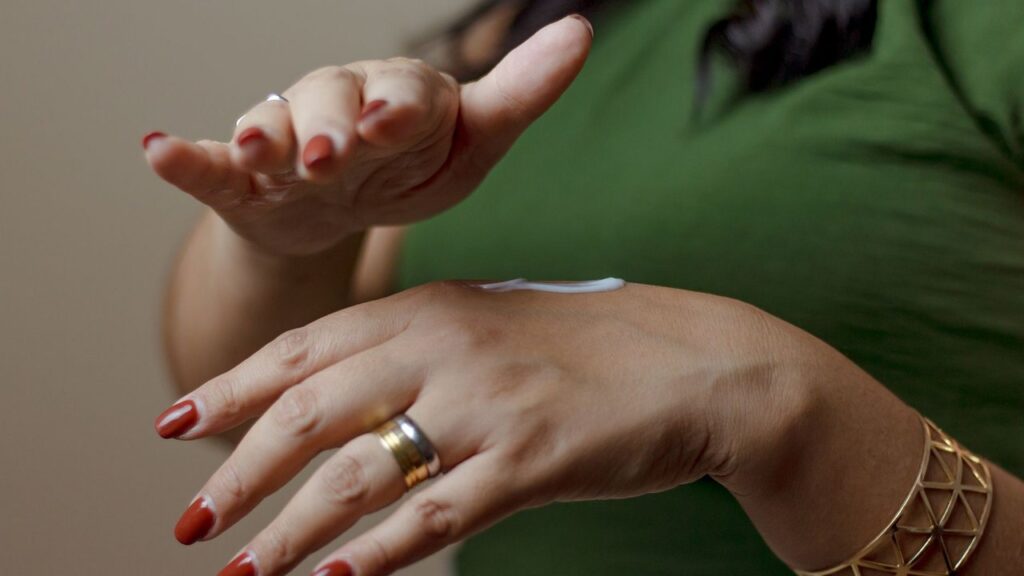
Cold weather does not affect every reddened, itchy patch of skin the same way, and that matters more than it sounds. Dry winter air can cause ordinary dehydrated skin, a flare of eczema, or a reaction to something touching your skin, such as wool or a hot shower, and each one calls for a different response. Treating eczema like plain dryness, or treating a contact reaction like eczema, is a common reason winter skin care stops working.
Cleveland Clinic dermatologist Dr. John Anthony explains that cold, dry winter air is genuinely harder on skin than most people realize. “Cold air, wind and a decrease in humidity can all dry out skin,” he says, and that moisture loss is enough on its own to make skin flake, tighten and feel uncomfortable, even without any underlying skin condition. Indoor heating compounds the problem. When the temperature drops outside, the relative humidity drops indoors too, which is why a forced-air furnace running all night can leave skin feeling parched by morning. Managing Eczema Flare-Ups in Winter and Summer
Plain Dryness Versus an Eczema Flare
Ordinary winter dryness usually shows up as tightness, flaking or dullness across broad areas of skin, often without much redness or swelling. It tends to respond fairly predictably to moisture: a thicker cream applied right after a shower, while skin is still damp, traps water against the surface far better than a thin lotion applied to already-dry skin. Dr. Anthony notes that “petroleum jelly or heavier creams tend to work better than lighter lotions or gels” for this kind of seasonal dryness. Managing Eczema Flare-Ups in Winter and Summer
Eczema is a different animal, even though cold weather can trigger it in much the same way. According to Cleveland Clinic, eczema causes patches of extremely dry, itchy and inflamed skin that can look scaly or crusty, and the itch can be intense enough to disrupt sleep. The key difference is that eczema is an underlying inflammatory condition, not just a moisture problem, so it tends to recur in the same spots, such as the hands, face, inner elbows or behind the knees, and it does not fully resolve with moisturizer alone, even when moisturizer helps. “There’s not one answer that works for every person,” Dr. Anthony says, since eczema triggers vary from one person to the next and can include weather, sweat, certain fabrics or specific skincare ingredients. Managing Eczema Flare-Ups in Winter and Summer
Why Winter Hands and Faces Flare First
Winter eczema most often shows up on the hands and face, Cleveland Clinic notes, simply because those areas are left exposed to cold, dry wind while the rest of the body is covered. Gloves and a scarf are not just about comfort in that context; they are a practical way to reduce how much skin is exposed to the drying air in the first place. Clothing choices matter in the other direction too. Bundling up in heavy layers can cause sweating, and damp, sweaty fabric sitting against the skin can irritate eczema just as much as cold air can. Dr. Anthony describes this as a balance: breathable, quick-drying fabrics for anything active, and an avoidance of wool, which he points out is “often itchy and irritating to the skin,” especially for anyone already prone to flares. Managing Eczema Flare-Ups in Winter and Summer
When the Culprit Is Contact Irritation, Not Eczema or Dryness
A third pattern is worth separating out: skin that reacts specifically where it touches something, rather than reacting broadly to cold air. A rash that appears only where a wool sweater cuff rubs the wrist, or only on hands after dish soap, or only on the neck beneath a particular scarf, points toward a reaction to that specific material or ingredient rather than general winter dryness or eczema. Hot showers can produce a similar pattern. Dr. Anthony explains that “hot water can take protective oils out of the skin and cause inflammation,” so a shower that feels pleasant on a cold morning can leave skin reactive and tight by the time you step out, particularly on areas with thinner skin. The practical fix for contact irritation is different from the fix for dryness or eczema: instead of layering on more moisturizer, the goal is identifying and removing the specific trigger, whether that is a fragranced detergent, a rough fabric or water that is simply too hot. Managing Eczema Flare-Ups in Winter and Summer
Matching the Treatment to the Cause
Because these three patterns overlap and can even occur on the same hands in the same week, Cleveland Clinic recommends starting with the basics regardless of which one you suspect: a humidifier to put moisture back into dry indoor air, especially in the bedroom overnight, lukewarm rather than hot water for washing, and fragrance-free, hypoallergenic products to rule out an obvious irritant. If skin responds well to those changes and stays calm, plain seasonal dryness was likely the whole story. If redness, itching and inflamed patches keep returning in the same locations despite consistent moisturizing, that pattern looks more like eczema than simple dryness, and Dr. Anthony is direct about what comes next: “Everything you do to protect your skin is useful, but eczema can still break through. If that’s the case, talk to your primary care doctor, pediatrician or dermatologist. There are prescription therapies we can use to help get eczema under control.” Managing Eczema Flare-Ups in Winter and Summer
The most useful habit going into winter is not finding one universal moisturizer, but paying attention to where a reaction shows up, what it touches, and whether it fades with moisture alone or keeps resurfacing. That pattern is the clue that tells you whether you are dealing with dry air, an eczema flare, or a specific irritant worth eliminating, and it is the difference between a routine that actually works and one that just adds another product to the shelf.
Image Credit: Jessica Keli Alves — Pexels License / Pexels