
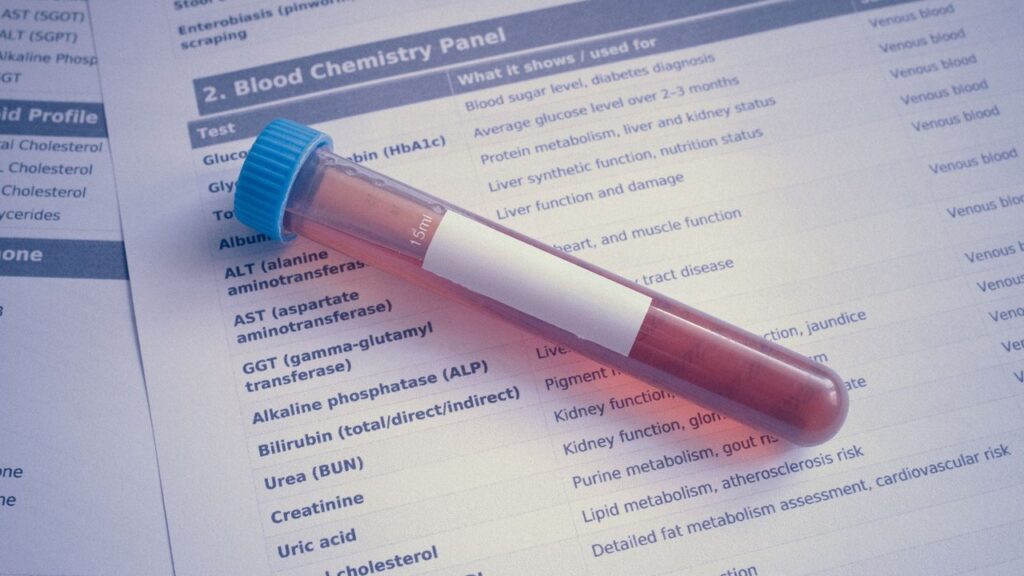
A lipid panel that comes back clean can feel like a green light, but heart disease doesn’t only answer to LDL. Cholesterol numbers are an important piece of the picture, not the whole picture, and the levels healthcare providers consider healthy — according to Cleveland Clinic, generally total cholesterol below 200 mg/dL and LDL below 100 mg/dL — are meant to be read alongside everything else going on in your body, not as a standalone verdict.
Why a Normal LDL Doesn’t Close the Conversation
Cleveland Clinic’s own guidance on cholesterol levels makes a point of saying that even when your numbers fall outside or inside the normal range, your provider will still look at other aspects of your health to understand your risk, and that cholesterol results should be discussed in the context of your overall health rather than treated as a final answer on their own. That matters because LDL is only one of several values measured on a standard lipid panel. The same blood draw also reports total cholesterol, HDL, VLDL and triglycerides, and a provider weighing your cardiovascular risk is looking at how those numbers relate to each other, not just whether one of them lands below a cutoff. Cholesterol: Understanding Levels & Numbers
HDL and Triglycerides Change the Read on LDL
A borderline LDL paired with a strong HDL tells a different story than the same LDL paired with a low one. Cleveland Clinic notes that HDL, the “good” cholesterol that helps clear excess cholesterol from circulation, is the one number providers want to see higher rather than lower, ideally between 60 and 80, and that the healthy threshold differs by sex — HDL shouldn’t fall below 40 in males or below 50 in females. VLDL, another cholesterol type measured on the same panel, is considered elevated at 30 or higher. Because triglycerides are drawn at the same time as the rest of the lipid profile, a provider reviewing your results isn’t isolating LDL from these companion numbers; an acceptable LDL sitting next to a low HDL or a high VLDL can still add up to meaningful risk. Cholesterol: Understanding Levels & Numbers
Your Testing Schedule Already Assumes Risk Factors Beyond the Numbers
One way to see that cholesterol is treated as part of a larger risk profile, rather than the whole of it, is how differently providers recommend checking it. Cleveland Clinic’s guidelines call for adults aged 20 to 44 to have cholesterol checked roughly every five years, but that interval shortens to every one to two years by age 45 to 65 and to annually after 65. Sex changes the timeline too — the five-year interval for females extends through age 54, compared with 44 for males, reflecting a later average rise in cardiovascular risk. Family history also moves up the schedule: someone with a close biological relative who had high cholesterol or a heart attack or stroke may need more frequent testing regardless of how clean their last result looked. None of that is about the cholesterol number itself; it’s about recognizing that age, sex and family history independently shape risk and deserve their own attention. Cholesterol: Understanding Levels & Numbers
What a Lipid Panel Can’t See
A standard cholesterol test doesn’t capture blood pressure, blood sugar regulation, smoking status, physical activity level or body composition — all factors that cardiovascular care typically weighs alongside lipids rather than instead of them. A woman with reassuring LDL and HDL numbers who also has elevated blood pressure, a sedentary routine, or a smoking history isn’t automatically in the clear just because her cholesterol printout looks tidy. This is part of why Cleveland Clinic frames the lipid panel as a conversation starter with your provider rather than a conclusion: your provider is positioned to fold in these other inputs in a way a cholesterol number by itself never can. If you have heart disease already or carry several risk factors, your target LDL may even be set lower than the general guideline — Cleveland Clinic notes a target below 70 mg/dL in that situation — which is itself an acknowledgment that the “normal” cutoff shifts depending on everything else about your health, not just the cholesterol reading in isolation. Cholesterol: Understanding Levels & Numbers
Reading Your Results With the Rest of the Picture
The practical takeaway isn’t to distrust a good cholesterol number — it’s to treat it as one data point among several. When you get your results, it’s worth asking your provider not just whether your LDL, HDL and triglycerides fall in range, but how those numbers interact with your blood pressure, blood sugar trends, family history and lifestyle habits to shape your actual cardiovascular risk. A clean lipid panel is genuinely good news; it just isn’t the whole report card, and treating it that way is exactly the gap your provider is there to fill.
Image Credit: Steppe Walker — Pexels License / Pexels