
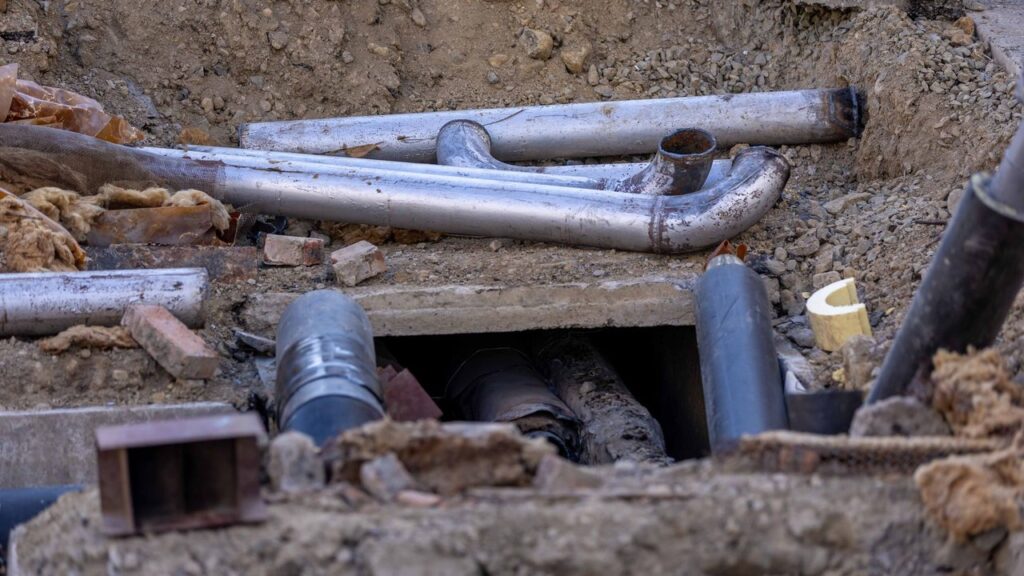
Before you crawl into a crawlspace with a flashlight, call your water utility. Under the Environmental Protection Agency’s 2021 Lead and Copper Rule Revisions, public water systems were required to build and maintain an inventory of service line materials and submit it to their state primacy agency by October 16, 2024, according to the EPA. That means many utilities now have at least a partial record of what your service line—the pipe connecting the main under the street to the plumbing in your house—is made of, and some post that inventory online or will share it if you call and ask. Getting Started with Lead Service Line Identification and Replacement | US EPA
The EPA notes there is no level of lead in drinking water considered safe, and that the most common sources are lead pipes and brass or bronze fixtures. Lead service lines were installed mostly from the late 1800s through the 1940s, so the age of your home and neighborhood is a reasonable starting clue, though it isn’t proof either way. Getting Started with Lead Service Line Identification and Replacement | US EPA
The EPA’s 2024 Lead and Copper Rule Inventory
The inventory requirement exists because, as the EPA puts it, identifying the location of lead service lines has been difficult for many communities due to poor recordkeeping and decades of repairs. The rule pushed utilities to compile whatever permit records, meter installation notes and historical maps they have into a single inventory, then make that information accessible. Your utility’s customer service line or website is the first place to check for your specific address; some systems have an online lookup tool, while others require a phone call or a written records request. Getting Started with Lead Service Line Identification and Replacement | US EPA
Why Many Utility Records Stop at the Property Line
Even a complete utility inventory may only tell half the story. As NPR’s longstanding lead-pipe guide explains, the portion of the service line from the main to the property line is often considered public and may already have been replaced by the utility, but the remaining stretch from the property line into the house is frequently classified as private property and the homeowner’s responsibility. That private segment is exactly where recordkeeping tends to be thinnest, because it was installed and sometimes modified by private plumbers over the decades rather than tracked by the city. So when you contact your utility, it’s worth asking specifically whether their inventory covers the full line to your house or only the public portion, and whether the private side is listed as known, unknown or presumed. Find the lead pipes in your home
The NPR Magnet-and-Coin Test You Can Do Yourself
If utility records come back incomplete, there’s a simple physical check you can do at home, outlined in NPR’s pipe-identification guide. Find where the service line enters the house, usually near the water meter or shutoff valve, typically about an inch in diameter. Try a refrigerator magnet on the pipe first: if it sticks, the pipe is likely galvanized steel, which NPR notes isn’t lead itself but can trap lead particles released by old lead fittings upstream and periodically shed them, even after any lead plumbing nearby has been removed. If the magnet doesn’t stick, use a coin or key to gently scratch the pipe near where it enters the wall. Copper will show a shiny, penny-like orange underneath. Lead is soft and scratches easily, revealing a dull silver or gray surface. Plastic pipe is a different story again—there’s less lead-health research on plastic plumbing specifically, but it’s generally regarded as a straightforward material to work with, and it isn’t itself a lead source, though older plastic systems can still have lead solder or fittings at joints. Find the lead pipes in your home
None of this replaces a water test or a plumber’s confirmation; the scratch test is a reasonable home screening step, not a certified result, and EPA’s companion resource, Protect Your Tap: A Quick Check for Lead, is built around the same idea of walking homeowners through identifying pipe material before deciding on next steps. Protect Your Tap: A Quick Check for Lead | US EPA
If You Confirm Lead: Filters, Flushing and NSF/ANSI Standard 53
If your utility’s inventory or your own check points to lead, NPR’s guide lays out a few concrete options. You can request a water test from your utility, keeping in mind that lead release from a pipe is sporadic, so one clean test result doesn’t guarantee the water is always lead-free. Short of full replacement, a water filter certified under NSF/ANSI Standard 53 for lead removal is a documented interim step, and letting a tap run for about five minutes after water has sat unused for several hours helps flush out water that has been in contact with the pipe the longest. The EPA’s guidance also flags that children six and younger are the most susceptible to lead’s effects, which is worth factoring in if your household includes young kids, since even low blood-lead levels have been linked to irreversible harm. Protect Your Tap: A Quick Check for Lead | US EPA
The practical starting point is still the phone call or online lookup with your utility, because that inventory—built under a federal deadline most homeowners never heard about—is often the fastest way to learn whether the question is even open on the public side of your line, before you ever need a magnet or a coin.
Image Credit: Sergei Starostin — Pexels License / Pexels